Home › Destinations › Bournemouth
Bournemouth
Bournemouth is one of the largest seaside towns on the south coast of England, and it is built around one thing: a long, sheltered, sandy beach that runs for about seven miles from the Sandbanks peninsula in Poole to Hengistbury Head near Christchurch. Above the beach are sandy cliffs, cut by wooded ravines the locals call chines, and on top of the cliffs sit the hotels. The town centre is set back from the sea, linked to the pier by the long, narrow Lower Gardens.
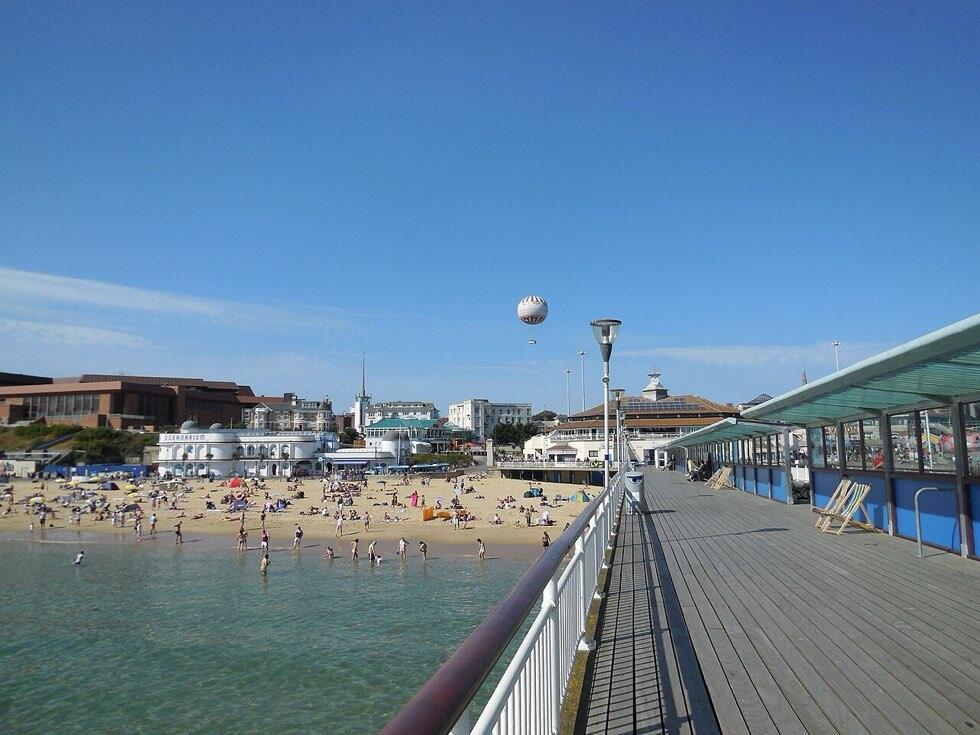

It suits a classic beach holiday, a long weekend from London, a conference, or a base for the Dorset coast. It is also a university town with a busy nightlife, so the centre on a Saturday night is livelier than the Victorian hotels on the clifftop might suggest.
Getting there
Trains run from London Waterloo to Bournemouth on the South Western main line in around two hours, continuing to Poole and Weymouth. Bournemouth station is about a mile from the pier, which is a twenty-minute walk downhill or a short bus ride. Pokesdown and Branksome stations serve the eastern and western ends of town. Cross-country trains connect Bournemouth with Southampton, Reading, Birmingham and the north. By car, the main approach is the A338 from the M27 and the A31, which is slow on summer Saturdays. Bournemouth Airport, near Hurn, has seasonal flights to the Channel Islands and Europe.
Where to stay
East Cliff and West Cliff are the traditional hotel quarters, on top of the cliffs either side of the pier. Both have large hotels with sea views and smaller ones on the streets behind. They are a short walk from the beach via zigzag paths or a cliff lift, when the lifts are running, and close to the town centre. The walk back up is steep, which matters if you have small children or a pushchair.
The town centre has newer hotels and apartments, convenient for shops, theatres and bars, with noise to match. Boscombe, to the east, has its own pier, a beach and a more mixed, slightly bohemian high street; it is often cheaper. Southbourne, further east again, is residential, with guest houses near a quieter stretch of beach and easy access to Hengistbury Head. To the west, Westbourne has independent shops and cafés, and the chines lead down to Alum Chine and Branksome beaches. Holiday flats and beach huts, the latter for the day rather than overnight, are part of the scene too.
The beach
The sand is fine, the bay is sheltered by the Isle of Wight and the Purbeck hills, and the beaches are lifeguarded in summer. Long promenades run along the bottom of the cliffs, so you can walk or cycle from Sandbanks to Hengistbury with the sea beside you. The busiest sections are around Bournemouth and Boscombe piers. If you want space, walk ten minutes east or west. Look out for the zigzags and the chines: they are the easiest ways up and down, and the shade is welcome on hot days.

Things to do in town
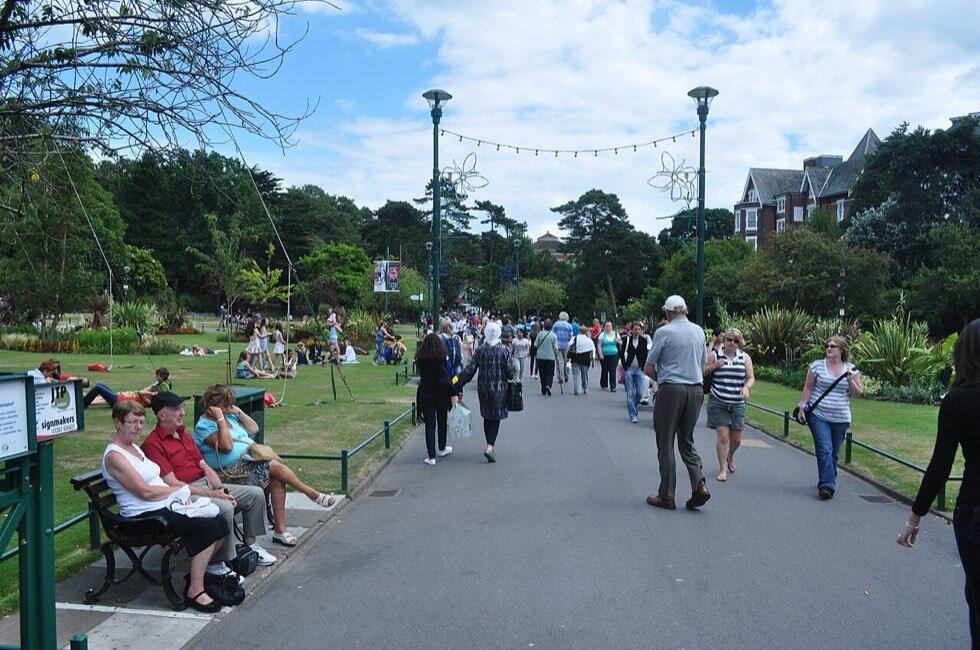
- The Lower, Central and Upper Gardens. A continuous line of parkland following the Bourne stream from the pier up through the centre, with the tethered balloon ride in the Lower Gardens in summer and a bandstand.
- Bournemouth Pier, with its zip wire to the beach and the pier theatre. Boscombe Pier, to the east, is quieter.
- The Russell-Cotes Art Gallery and Museum, a Victorian clifftop villa on East Cliff full of paintings and souvenirs collected by a hotel owner and his wife.
- Hengistbury Head. A headland at the eastern end of the bay with an Iron Age earthwork, heath and views over Christchurch Harbour. A land train runs out to the beach huts on Mudeford Spit, or you can walk.
- Air Festival. When it is held, usually in late summer, it brings display teams over the bay and very large crowds.
Day trips
Bournemouth is a good base for the eastern end of the Jurassic Coast and the New Forest. The Sandbanks chain ferry crosses the mouth of Poole Harbour to Studland, from where you can walk to Old Harry Rocks, the chalk stacks at the end of the Purbeck hills. Swanage, Corfe Castle and the Swanage steam railway are beyond. From Poole Quay, boats run to Brownsea Island, which is National Trust land with red squirrels. Inland, the New Forest is half an hour away, with ponies, heath and villages such as Lyndhurst, Brockenhurst and Burley. Christchurch, at the eastern edge, has a priory church and a harbour.
When to go
July and August are busy and hot by British standards, and the beach car parks fill early. June and September are often the best months: warm enough for the beach, quieter and cheaper. Bournemouth is also a popular out-of-season break, with theatre and conferences in winter, and hotels that stay open year round.
A three-day plan
Day one: walk down through the gardens to the pier, then east along the promenade to Boscombe for lunch and back. Day two: take the bus or drive to Sandbanks, cross on the chain ferry and walk to Old Harry Rocks. Day three: Hengistbury Head in the morning, or the New Forest if the weather is poor on the coast.
Before you book
- Ask whether a "sea view" hotel room actually faces the sea or only glimpses it.
- Check parking. Clifftop hotels often have limited spaces, and on-street parking near the beach is controlled in summer.
- Graduation weeks, big conferences and the air festival fill hotels quickly. So do summer weekends.
For another long sandy resort, compare Blackpool. If you are heading further west, read Lyme Regis, Devon and Cornwall.
Frequently asked questions
Is Bournemouth beach good for children?
Yes. The sand is fine and soft, the water shelves gently in most places, and lifeguards patrol the main beaches in the summer season. Toilets, cafés and beach huts are spread along the promenade. The busiest stretches are by the two piers; for more space walk ten minutes in either direction. The zigzag paths and cliff lifts make the climb back up easier, though the lifts do not run all year.
Can I visit Bournemouth without a car?
Easily. Trains from London Waterloo take around two hours, and buses link the station with the seafront, Boscombe, Southbourne and Poole. The promenade is ideal for walking or cycling, and the chain ferry at Sandbanks takes foot passengers across to Studland. A car becomes useful only for the New Forest and the further reaches of the Purbeck coast, and summer parking near the beach is expensive.
What is the difference between Bournemouth, Boscombe and Southbourne?
Bournemouth is the main town, with the big hotels, the gardens, the pier and the shops. Boscombe, to the east, has its own pier and beach and a more mixed high street, with lower prices. Southbourne, further east again, is residential and quieter, with guest houses near the cliff and easy access to Hengistbury Head. All three share the same long beach and promenade.
How do I get to Old Harry Rocks from Bournemouth?
Take a bus or drive to Sandbanks, then cross the mouth of Poole Harbour on the chain ferry to Shell Bay. From there, walk along Studland beach or take the bus to Studland village, then follow the clifftop path east to Old Harry Rocks. Allow most of a day if you walk. The Purbeck Breezer bus also runs from Bournemouth to Swanage via the ferry.
Guide me to UK is an independent information site. We do not own hotels or take bookings. Fares, opening hours and timetables change, so confirm them before you travel. Last updated 1 November 2026.