Home › Destinations › Torquay
Torquay
Torquay is the largest of the three towns around Torbay, the wide south-facing bay on the Devon coast that has been marketed as the English Riviera since Victorian times. The town spreads over a series of hills around a harbour and marina, with grand villas and hotels on the slopes, palm trees along the seafront, and a string of small beaches tucked under red sandstone cliffs. Paignton lies to the south with its long sands and pier, and Brixham, a working fishing port, sits on the far side of the bay.
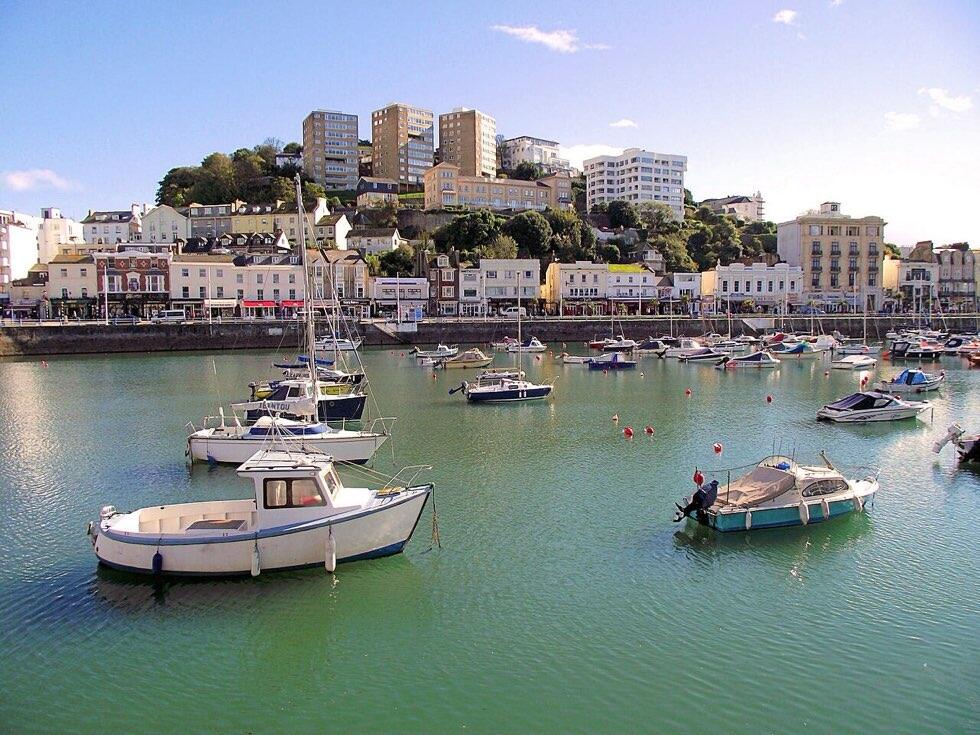

Torquay suits a classic seaside holiday with hotels and restaurants within walking distance, a car-free trip by train, and a base for exploring Dartmoor and the South Hams. It is busier and more built-up than the small estuary towns up the coast. If you would rather have a village and a passenger ferry, read Shaldon.
Getting there
Torquay is on the Riviera Line, the branch that leaves the main line at Newton Abbot and runs to Paignton. Torquay station is on the seafront near Torre Abbey Sands and the Abbey; Torre station is higher up, closer to the town's inland streets. Some trains run directly from London Paddington and from the Midlands and north; otherwise change at Newton Abbot or Exeter St Davids. The journey along the sea wall between Dawlish and Teignmouth is one of the best railway views in Britain, so sit on the left heading south.
By road, the A380 links Torquay with the end of the M5 at Exeter, now via a dual-carriageway bypass around Kingskerswell. Summer weekends still bring queues into the bay. Exeter Airport is about forty minutes away by car.
Which area to stay in
The harbour and town centre are the most convenient: the marina, bars, restaurants, the Princess Theatre and the Pavilion are all here, and you can walk to the station. Some streets are lively late at night at weekends.
Belgrave Road and the seafront towards Torre Abbey have many of the town's guest houses and mid-sized hotels, in a grid of Victorian terraces a few minutes from the beach and the station. It is the practical choice for a car-free stay.
Babbacombe and St Marychurch, on the cliffs to the north, are quieter, with a village feel, the Babbacombe Downs promenade and a cliff railway down to Oddicombe beach. They are a bus ride or a long walk from the harbour.
The Lincombes and Meadfoot, to the east of the harbour, are leafy hills of large villas, many now hotels and holiday apartments, near Meadfoot Beach and Daddyhole Plain. Expect steep walks back from town.
The bay also has holiday parks on the edges of Paignton and Brixham, and self-catering apartments in converted villas. Paignton is generally cheaper and better for a sandy beach with small children. Brixham is the place for a harbour view and fish suppers.

Beaches
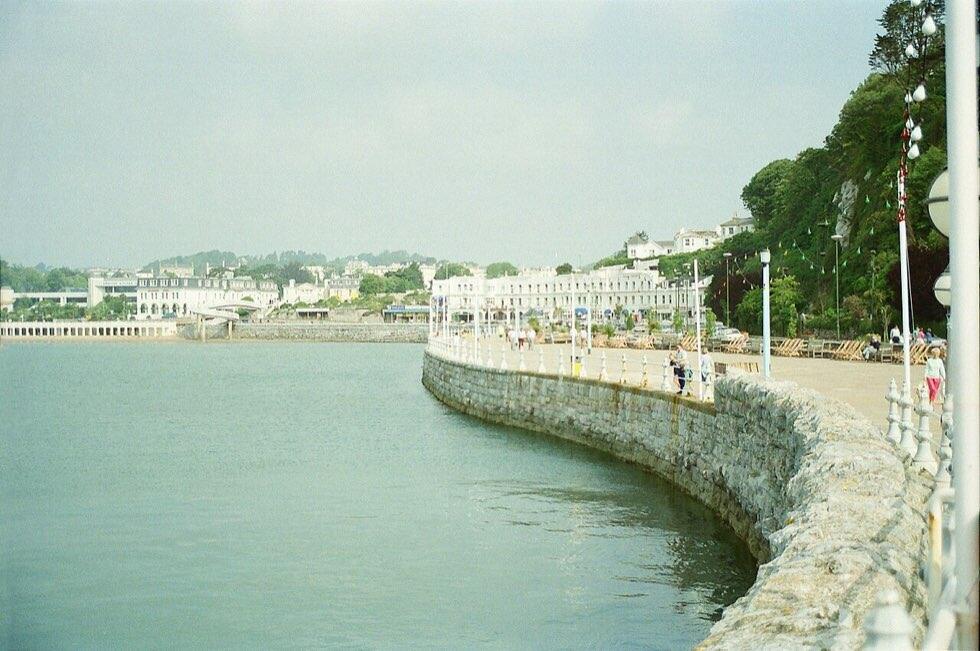
- Torre Abbey Sands: the town beach in front of the Abbey, sandy at low tide and covered at high tide.
- Meadfoot Beach: shingle and sand east of the harbour, with beach huts and views of Thatcher Rock.
- Anstey's Cove: a small cove under the cliffs, popular with snorkellers, reached by a steep path.
- Oddicombe Beach: below Babbacombe, reached by the cliff railway, with a café and red cliffs above.
- Paignton and Goodrington Sands: long, sandy and family-friendly, a short train or bus ride south.
What to do
The town has more than enough for a week: Kents Cavern, Torre Abbey's museum and gardens, Cockington village, the cliff railway, the Torbay ferry to Brixham, the Dartmouth steam railway from Paignton, and a long section of the coast path. These are described in more detail on the things to do in Torquay page. Torquay is also where Agatha Christie was born, in 1890, and the town marks the connection with a trail and an annual festival around her birthday in September.
Getting around the bay
Local trains link Torquay, Torre and Paignton every half hour or so. Frequent buses run along the seafront between Torquay, Paignton and Brixham, and up to Babbacombe. In the summer season, passenger ferries cross the bay between Torquay harbour and Brixham, which is faster and more pleasant than the bus. Parking in the town centre is in multi-storey and council car parks; check whether your hotel has spaces, because many Victorian villas do not.
When to go
Torbay has one of the mildest climates in mainland Britain, and the season starts early. Spring and early summer are pleasant and quieter. July and August are busy with families and coach tours. September is often warm and the sea is at its warmest. Winter is quiet; many hotels stay open and offer breaks, but some seasonal attractions close.
A three-day plan
Day one: walk from the harbour to Torre Abbey, visit the gardens and the museum, then follow the seafront and the coast path to Cockington for tea. Day two: take the bus or walk to Babbacombe, ride the cliff railway to Oddicombe, and visit Kents Cavern on the way back. Day three: take the ferry to Brixham for the harbour and Berry Head, or the steam train from Paignton to Kingswear and the ferry to Dartmouth.
Before you book
- Check how steep the walk is from your accommodation to the seafront. Torquay is built on hills.
- Ask about parking, particularly in the centre and the Lincombes.
- Coach-tour hotels can be good value but may have set dinner times and entertainment. Read what is included.
- The ferries across the bay are seasonal and depend on the weather.
Nearby guides: Brixham and Paignton, Teignmouth, Dawlish, Dartmoor and the wider Devon overview.
Frequently asked questions
Is Torquay or Paignton better for a family holiday?
Paignton usually suits young children better, with its long, flat sandy beaches at Paignton and Goodrington, the zoo and lower prices. Torquay has smaller beaches, more restaurants, the harbour and more for adults in the evening. They are only a few minutes apart by train or bus, so many families stay in one and visit the other. Brixham is quieter again, with a working harbour.
Can I get around Torbay without a car?
Yes. Local trains link Torquay, Torre and Paignton, buses run frequently along the seafront to Brixham and up to Babbacombe, and seasonal ferries cross the bay between Torquay and Brixham. The Dartmouth Steam Railway starts in Paignton. A car is useful only for Dartmoor and the South Hams, and parking in Torquay town centre can be expensive.
What is the English Riviera Geopark?
Torbay is a UNESCO Global Geopark because its rocks, caves and fossils record hundreds of millions of years of earth history. Kents Cavern, Berry Head and the cliffs along the coast are among its key sites. Information boards along the coast path explain what you are looking at, and the Geopark organises guided walks and events through the year.
Where does Agatha Christie fit in?
Agatha Christie was born in Torquay in 1890 and spent much of her early life there. She later bought Greenway, a house on the River Dart, as a holiday home. Torquay has a mile-long trail of places linked to her life, and an Agatha Christie gallery in Torquay Museum. Greenway is now run by the National Trust and can be reached by ferry, car or the steam railway.
Guide me to UK is an independent information site. We do not own hotels or take bookings. Fares, opening hours and timetables change, so confirm them before you travel. Last updated 1 November 2026.