Home › Destinations › Lyme Regis
Lyme Regis
Lyme Regis is a small harbour town on the Dorset side of the Devon border, in the middle of the Jurassic Coast World Heritage Site. Its old streets drop steeply down a narrow valley to a sandy beach, and its curved stone harbour wall, the Cobb, is one of the most famous in English literature. The cliffs on either side are packed with fossils, and it was here, in the early nineteenth century, that Mary Anning made the finds that helped to change scientific ideas about the history of life.
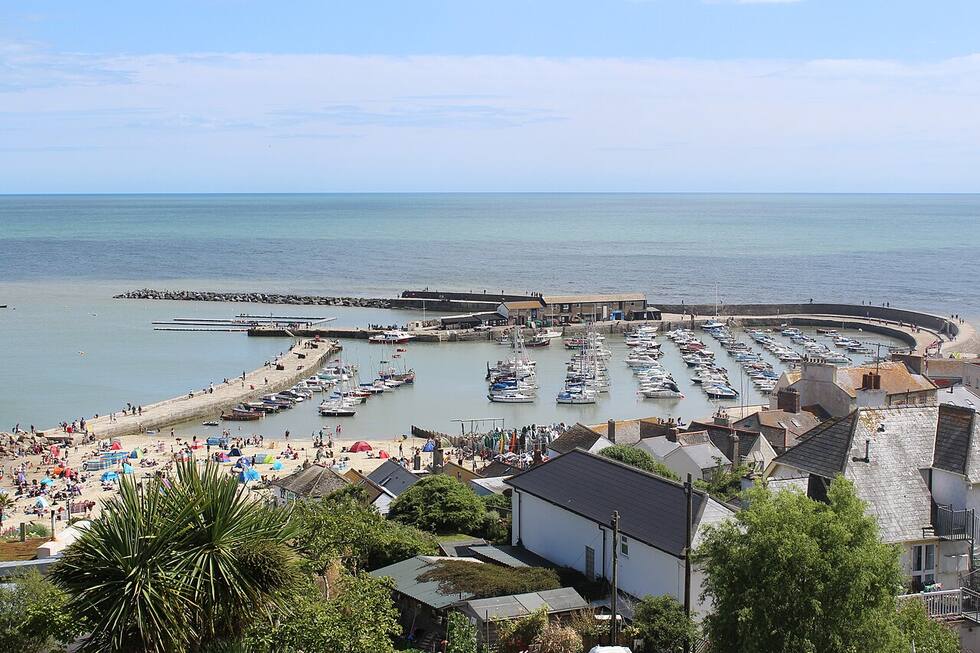

Lyme suits a slow few days of walking, fossil hunting, beach time and good food. It is compact and popular, with narrow roads and limited parking, so it can feel crowded in August. It is a lovely place out of season, when the town keeps much of its charm and the winter storms clear fresh fossils from the cliffs.
Getting there
The nearest station is Axminster, about six miles inland, on the South Western Railway line between London Waterloo and Exeter. Buses run from Axminster to Lyme Regis, and coastal buses link the town with Seaton, Bridport and Weymouth. Services change, so check Traveline before you travel. A taxi from Axminster is a simple backup.
By car, the A35 passes a few miles to the north, and the A3052 and A3070 lead down to the town. The main road through Lyme is steep and narrow, and it gets congested. The large car parks at the top of the town, including Holmbush above the Cobb, are usually better than trying the centre, and you can walk down in ten minutes. Remember that it will be uphill on the way back.
The Cobb and the seafront
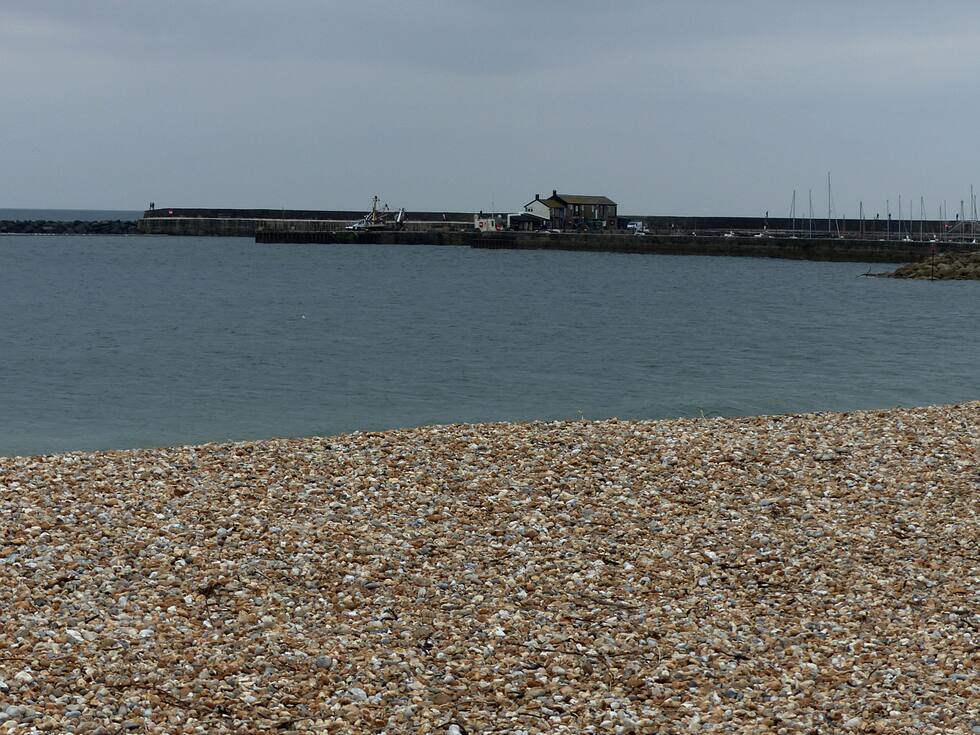
The Cobb is a medieval harbour wall that has been rebuilt many times. It shelters the small harbour and its fishing and pleasure boats. Jane Austen visited Lyme and set a key scene of Persuasion on its steps, and John Fowles, who lived in the town, put his French Lieutenant's Woman at its end. The upper level is sloping, uneven and can be slippery, and in a storm it is dangerous, so stay off it in rough seas.
From the harbour, the Marine Parade, known locally as the Walk, runs along the front past cafés and beach huts to the town's main beach. The sand here was added as part of sea defence works, making it a sheltered spot for families. Above the Parade, Langmoor and Lister Gardens climb the hillside, with views across Lyme Bay. Gun Cliff has a walkway around the base of the town, and a statue of Mary Anning with her dog now stands close to the seafront.

Fossils and Mary Anning
Mary Anning, born in Lyme in 1799, was a working-class woman with no formal schooling. With her family, she began collecting fossils from the cliffs to sell, and she became one of the most important fossil hunters in history. She found the first complete plesiosaur and the first British pterosaur, as well as ichthyosaurs. Men of science bought her specimens, often without crediting her, and she was largely overlooked in her lifetime.
The Lyme Regis Museum stands on the site of her birthplace, and it covers her life, the town's history and its literary links. Several fossil shops sell specimens, and the museum and other local guides lead fossil walks on the beach, which are the best way to start, especially with children.
Good places to look include Monmouth Beach, west of the Cobb, where the ammonite pavement has hundreds of large fossils set in a rock ledge, visible at low tide. Charmouth, two miles east, is even better known for finds, and its Heritage Coast Centre explains what you are looking at and runs guided walks.
Follow the fossil code. Look on the beach among the loose stones, not in the cliffs. Do not hammer at the rock faces. Check tide times so you are not cut off, and stay well away from the base of the cliffs, which are unstable and have had serious landslips. Rain and winter storms bring down the best finds, and they also make the cliffs most dangerous.
Walks
- The Undercliff to Seaton. A national nature reserve of dense, jungle-like woodland formed by landslips. The path west to Seaton is about seven miles, with no exits in between once you are in. It has been closed in sections in the past, so check the South West Coast Path website first.
- Golden Cap. East of Charmouth, the highest point on the south coast of England at around 190 metres, owned by the National Trust. Walk up from Seatown or from the Langdon Hill car park, for a huge view along Lyme Bay.
- The River Lim. A short, gentle riverside walk upstream from the Town Mill, a restored watermill with craft workshops and cafés, through the back lanes of the town.
Day trips
East along the coast, West Bay near Bridport has golden cliffs, made famous by the television drama Broadchurch, and Bridport itself has a good market and antique shops. Abbotsbury has a swannery and subtropical gardens. West of Lyme, Beer is a fishing village with boats pulled up on a pebble beach, and Seaton has an electric tramway through the Axe valley. Bournemouth and the eastern end of the World Heritage Site are around two hours' drive away; see the Bournemouth guide. Exeter is about an hour by road.
Where to stay
The town centre has inns, small hotels and guest houses, plus many holiday cottages and flats, often in old buildings on steep streets. Places on Marine Parade and around the Cobb have sea views and high prices in summer. The roads at the top of the town, including Uplyme just over the Devon border, are quieter and have more parking. Charmouth has hotels, guest houses and caravan parks, and it is a good alternative for fossil hunters. Campsites are found along the hills inland. Book well ahead for summer weekends and the town's festival dates.
When to go
Summer brings warm sea, a lifeboat week and a regatta, and the highest prices. The Lyme Regis Fossil Festival, held in some years in spring, is a busy event for families. Winter is the best time for fossil hunting, though you will need to take care with the tides and cliffs. Spring and early autumn are ideal for walking and quieter beaches.
A two-day plan
Day one: walk the Cobb, go along the Walk to the main beach, visit the Lyme Regis Museum and take a guided fossil walk if one is running at low tide. Day two: drive or take the bus to Charmouth for the Heritage Coast Centre and the beach, then climb Golden Cap in the afternoon.
Frequently asked questions
Will I actually find a fossil at Lyme Regis?
Quite possibly, especially on Charmouth beach after rough weather. Small ammonites and belemnites turn up among the loose stones on a falling tide. A guided fossil walk is the best way to learn what to look for, and it greatly improves your chances. Do not dig into the cliffs. Everything you need is in the loose shingle.
Is Lyme Regis in Dorset or Devon?
Lyme Regis is in Dorset, right on the county boundary. The neighbouring village of Uplyme is in Devon. The town is on the Jurassic Coast, which runs from Exmouth in Devon to Studland in Dorset, so it is a convenient base for exploring both counties.
Can I reach Lyme Regis without a car?
Yes. Take the train to Axminster on the line from London Waterloo and Exeter, then a bus or taxi the last six miles. Once you are there, the town is walkable, and buses run along the coast to Charmouth and Bridport. A car is useful for places such as Golden Cap, though the coast path also goes there.
Is Lyme Regis suitable for people with limited mobility?
The seafront, the Marine Parade and the lower level of the Cobb are mostly level. The rest of the town is steep, including Broad Street, and many cottages have stairs. Choose accommodation near the seafront if hills are a problem, and ask about parking and access before you book.
Guide me to UK is an independent information site. We do not own hotels or take bookings. Fares, opening hours and timetables change, so confirm them before you travel. Last updated 7 November 2026.