Home › Destinations › Ilfracombe and Woolacombe
Ilfracombe and Woolacombe
Ilfracombe and Woolacombe sit about five miles apart on the Atlantic coast of north Devon. Ilfracombe is a Victorian resort and working harbour, built on steep hills around rocky coves, with a theatre, a high street and a slightly faded grandeur that has been warming up in recent years. Woolacombe is a village behind one of the best beaches in England, three miles of sand facing straight out to sea. One is a town with coast around it, and the other is a beach with a village attached.
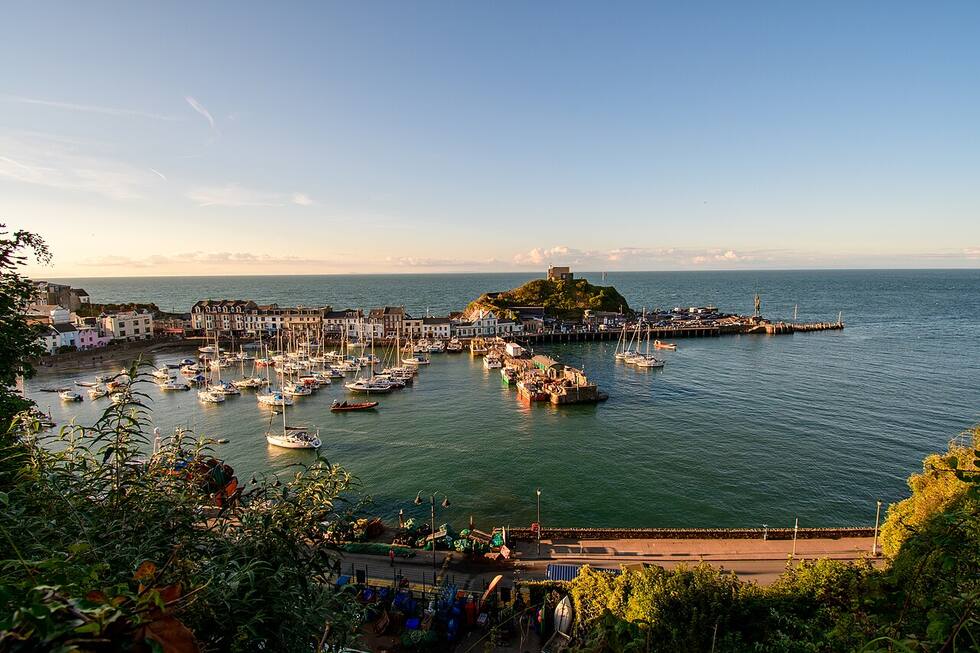

Woolacombe suits families and surfers who plan to spend the week on the sand. Ilfracombe suits people who want restaurants, a harbour to wander, boat trips and easy access to the western edge of Exmoor. Walkers will be happy in either. For a smaller surf village just to the south, see the guide to Croyde.
Getting there
The railway to Ilfracombe closed in 1970, and the nearest station today is Barnstaple, at the end of the Tarka Line from Exeter. Regular buses run from Barnstaple to Ilfracombe via Braunton, and a local bus links Ilfracombe with Woolacombe and Mortehoe, with more services in summer. Check the times on Traveline before you rely on them.
By car, most visitors leave the M5 at Tiverton and take the A361 North Devon Link Road to Barnstaple, then continue through Braunton. The A399 is an alternative route across the edge of Exmoor from South Molton. Expect queues in Braunton on summer Saturdays. Woolacombe's seafront car parks fill early on hot days, and the village is small enough that traffic backs up quickly.
Ilfracombe: what to see and do
- The harbour. A natural harbour under Lantern Hill, with fishing boats, pleasure trips, cafés and an aquarium on the pier that focuses on local sea life.
- Verity. Damien Hirst's towering stainless steel and bronze statue of a pregnant woman holding a sword stands at the harbour mouth, on long-term loan. It is more than twenty metres tall, and few people have no opinion about it.
- The chapel on Lantern Hill. The small medieval chapel of St Nicholas on top of the hill has served as a lighthouse for centuries. The short climb gives the best view of the town.
- Tunnels Beaches. Tunnels cut through the cliff by hand in the 1820s lead to sheltered beaches and a tidal bathing pool from the Victorian era. It is privately run and there is an admission charge.
- The Landmark Theatre. The pair of white cones on the seafront, a local landmark in their own right, house a theatre and café. Capstone Hill, next to it, is a short walk with a wide view along the coast.
- Boat trips to Lundy. In season, the MS Oldenburg sails to Lundy Island from Ilfracombe or Bideford, depending on the tides. The crossing takes around two hours. Lundy is a granite island with seabirds, seals, a shop and a pub, and it is run by the Landmark Trust. Sailings can be cancelled in rough weather.
Woolacombe: the beach and the headlands
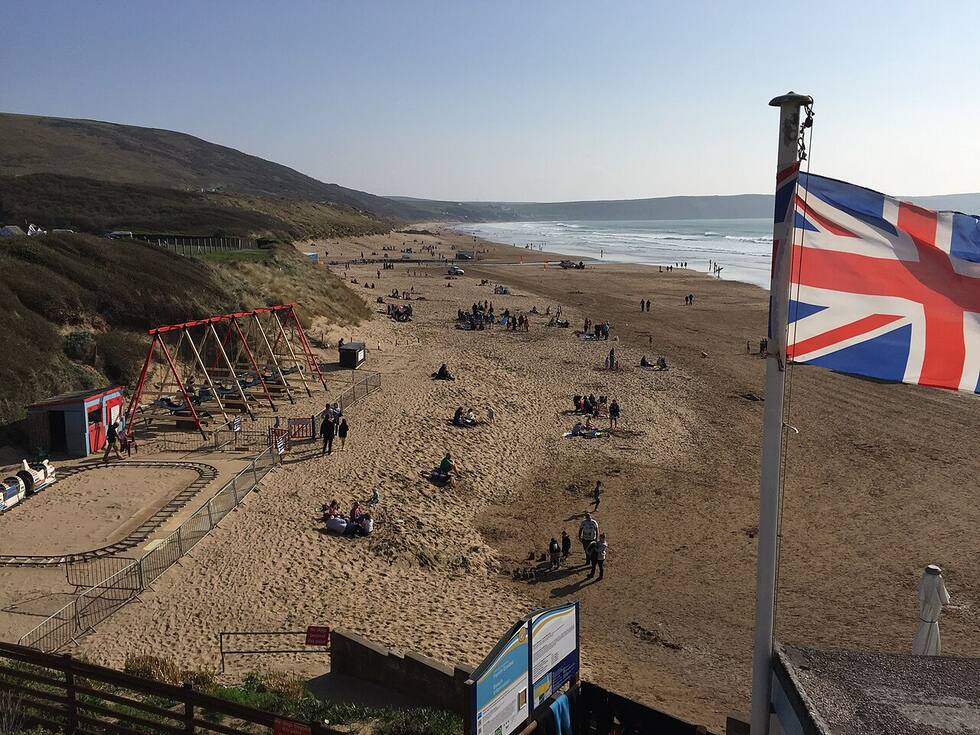
Woolacombe Sands runs south from the village to Putsborough, with wide, clean sand and dunes behind. The beach is lifeguarded in season at the northern end, and the rolling surf is good for beginners. If the northern end is busy, walk south; the beach is long enough that it thins out quickly. Barricane Beach, a tiny cove at the northern end, is made up largely of shells carried in by the tide.
North of the village, Morte Point is a jagged slate headland owned by the National Trust, with seals sometimes visible offshore. A circular walk from Mortehoe around the point takes around two hours. Mortehoe, the older village on the hill, has a Norman church, pubs and a small museum. Further east, the path leads past Bull Point lighthouse to Lee Bay, a secluded cove in a wooded valley, and then on to Ilfracombe.

Exmoor and other days out
East of Ilfracombe, the road runs through Combe Martin, a long village with a beach at the end, and rises to the edge of Exmoor National Park. The cliffs here are among the highest in England. The walk up the Great Hangman from Combe Martin climbs to the highest sea cliff on the mainland coast. The wooded Heddon Valley is good for shorter walks, and Lynton and Lynmouth are connected by a water-powered cliff railway. Inland, Arlington Court is a National Trust house with a carriage museum. South of Woolacombe, Saunton Sands and Braunton Burrows are covered in the Croyde guide. Barnstaple has a Victorian pannier market and is the start of the flat Tarka Trail cycle path.
Where to stay
Ilfracombe has a large stock of Victorian guest houses and small hotels, mostly in the streets west of the high street and on the Torrs. Prices are usually lower than in the surf villages. Some boutique places have appeared in recent years, along with apartments near the harbour. Many houses are on steep hills, so check how far you will have to walk with your bags.
Woolacombe has seafront hotels, apartments with sea views and a very large choice of holiday parks and campsites on the slopes behind the village, some with their own pools and entertainment. Mortehoe is quieter, with a few inns and cottages. Georgeham and Croyde are options to the south. Book early for August, when the holiday parks are often full.
When to go
July and August are the warmest and busiest months, with lifeguards on duty and full car parks. September is often the best time for surfing and swimming, because the sea is at its warmest and the crowds have gone. Spring is good for walking, with wild flowers on the headlands. Ilfracombe has a Victorian celebration in June and a programme of summer events. Winter is quiet and windy, and Ilfracombe, being a real town, stays more open than Woolacombe does.
A three-day plan
Day one: walk Ilfracombe harbour, climb Lantern Hill and visit the Tunnels Beaches. Day two: a morning on Woolacombe Sands, then the Morte Point circuit from Mortehoe. Day three: take the boat to Lundy if it is sailing. If not, drive to Combe Martin and walk up to the Great Hangman, or head to Lynmouth for the cliff railway.
Practical notes
- Rip currents are common on this coast. Swim and bodyboard between the red and yellow flags, and take advice from the lifeguards.
- Atlantic water stays cool all year, so most people hire a wetsuit even in summer.
- The coast path here is steep in places, and the distance between towns is greater than it looks.
- For the county as a whole, read the Devon guide.
Frequently asked questions
Is Ilfracombe or Woolacombe better for a family holiday?
Woolacombe is the classic choice for families who want a big sandy beach, lifeguards and a holiday park with a pool. Ilfracombe has smaller beaches but more to do on a wet day, including the aquarium, the theatre and the town itself. Some families stay in Woolacombe and visit Ilfracombe for a day out.
How do I get to Lundy from Ilfracombe?
The MS Oldenburg sails to Lundy in season, usually from around spring to autumn, from either Ilfracombe or Bideford, depending on the tide. The crossing takes about two hours, and day trips give you a few hours ashore. Book ahead, since places are limited, and be prepared for cancellations in bad weather.
Do I need a car in north Devon?
A car is very useful, particularly for Exmoor and the smaller beaches. If you do not have one, stay in Ilfracombe, which has regular buses to Barnstaple and its railway station, or in Woolacombe, if you are happy to remain near the beach. Many coastal walks can be done from a bus stop in one direction.
Is Woolacombe good for learning to surf?
Yes. The long beach has gentle, rolling waves on most summer days, and there are surf schools and board hire in the village. The southern end towards Putsborough is more sheltered in a south-westerly wind. Always surf in the zones marked by the lifeguards, and take a lesson if you are a beginner.
Guide me to UK is an independent information site. We do not own hotels or take bookings. Fares, opening hours and timetables change, so confirm them before you travel. Last updated 7 November 2026.