Home › Destinations › Croyde
Croyde
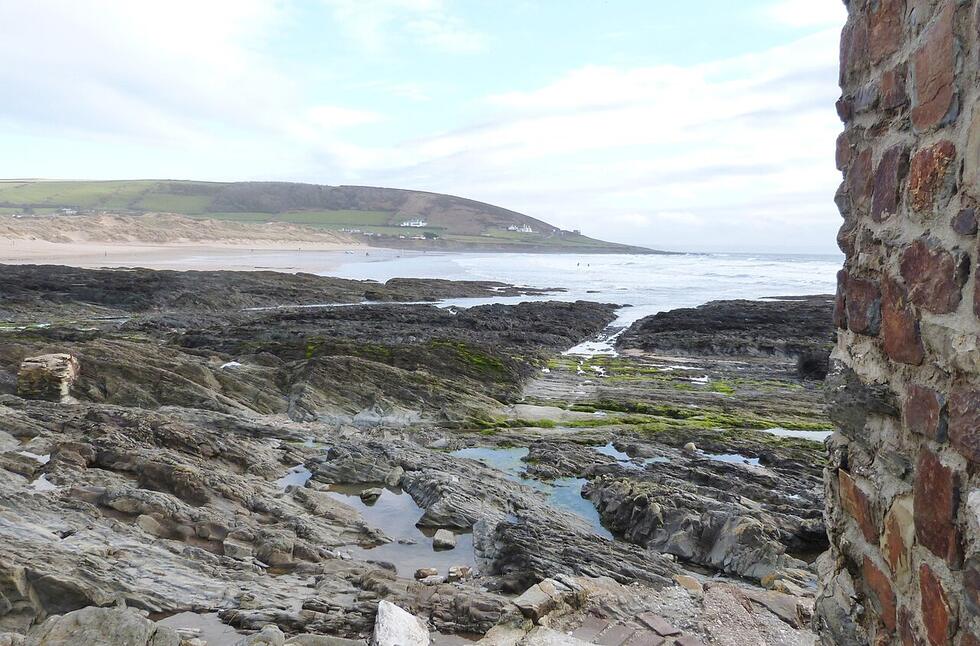
Croyde is a small village and a sandy bay on the north Devon coast, between Saunton and Woolacombe. It is best known for surf: the beach break at Croyde is one of the most consistent in England, and on a good swell the bay fills with surfers. Behind the beach, the village has thatched cottages, a stream, a couple of pubs, surf shops and cafés. To the north, the headland of Baggy Point juts out into the Atlantic, owned by the National Trust and laced with clifftop paths.

Croyde suits surfers, families who want to spend a week on one beach, and walkers. It is very busy in July and August, with campsites full and the roads into the village queued. In spring and autumn, it is quiet, the surf is often better, and the village returns to the locals.
Getting there
The nearest railway station is Barnstaple, at the end of the Tarka Line from Exeter. From Barnstaple, buses run to Braunton, and some continue to Croyde and Georgeham; services are more frequent in summer. Most visitors drive. The route is via the A361 North Devon Link Road to Barnstaple, then to Braunton, then the B3231 over the hill to Croyde. The last few miles are narrow in places. Parking in the village is limited, and the main beach car parks fill early on sunny days.
Cyclists can follow the Tarka Trail, a traffic-free path on an old railway line from Barnstaple to Braunton, and then use quiet roads to Croyde.
The beach and the surf
Croyde Bay is a short, wide sandy beach between rocky headlands. At low tide it is huge and flat; at high tide it shrinks. Surfers come for the low-tide waves, which can be powerful and hollow. At high tide the break becomes a shore dump, and beginners should avoid it. The beach is lifeguarded in the summer season. Surf schools operate on the beach and in the village, offering lessons and hire. Rockpools at either end are good for children.
Rip currents are common on north Devon beaches. Swim and bodyboard between the red and yellow flags, and surf in the black and white flagged zone.

Baggy Point
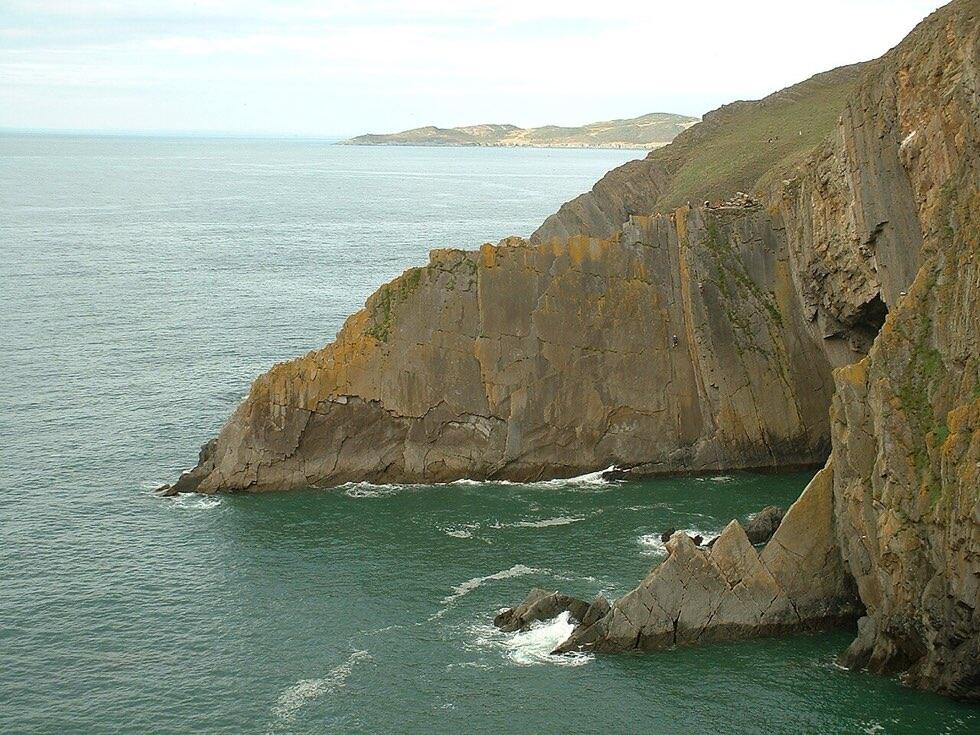
Baggy Point is a sandstone headland just north of the bay, with a National Trust car park and café at the start of the walk. A circular route of about three to four miles follows the clifftop to the point and back along the inland path, with views across to Lundy Island and down the coast to Hartland. The cliffs are popular with climbers, and seabirds nest here in spring. Look out for the whale bone at the start of the path, from a whale washed up in the nineteenth century.
Nearby beaches
- Saunton Sands: about three and a half miles of sand to the south, backed by the dunes of Braunton Burrows. It is gentler than Croyde and good for longboarding and beginners.
- Braunton Burrows: one of the largest sand dune systems in Britain, the core of a UNESCO biosphere reserve, with wild flowers, butterflies and paths through the dunes.
- Putsborough and Woolacombe: a three-mile beach running north from Baggy Point, with Putsborough at the sheltered southern end and Woolacombe village at the northern end. See the Ilfracombe and Woolacombe guide.
Where to stay
Croyde's accommodation is mainly self-catering cottages and houses, some thatched and very old, some modern with sea views. There are several campsites and holiday parks around the village, some right behind the beach, which are popular with surfers and families. A few pubs and inns have rooms. In summer, cottages normally rent by the week with Friday or Saturday changeovers. Georgeham, a mile inland, is a pretty village with more cottages and pubs. Braunton, a larger village on the main road, has supermarkets and more choice, at the cost of a short drive.
If you do not have a car, choose a place within walking distance of the beach and the village shop, and plan bus trips to Braunton and Barnstaple.
When to go
Summer brings warm water, lifeguards, busy beaches and lively evenings in the village. September and October often bring better surf with fewer people. Winter surf is powerful and best for experienced surfers in thick wetsuits. Spring is good for walking and for wild flowers on the dunes. Bank holidays and the school summer holidays are the busiest times.
A long weekend plan
Day one: a surf lesson in the morning at low tide, then the Baggy Point walk in the afternoon and a pub dinner. Day two: drive or cycle to Braunton Burrows and Saunton Sands, and in the evening walk on the beach at sunset. Day three: head north to Woolacombe and on to Ilfracombe, or south to Barnstaple's Pannier Market and the Tarka Trail.
Practical notes
- Book cottages and campsites for August several months ahead.
- Bring a wetsuit or hire one locally. The Atlantic stays cool even in summer.
- Phone signal and Wi-Fi can be patchy in older cottages. Ask before booking if you need to work.
- For the rest of the county, read the Devon guide. For more Atlantic coast, see Cornwall and Padstow.
Frequently asked questions
Is Croyde good for beginner surfers?
Croyde can be good for beginners at mid tide on smaller days, with lessons from one of the surf schools, but the low-tide waves can be powerful and hollow and are better for experienced surfers. Saunton Sands, a few miles south, has gentler, longer waves and is often a better choice for a first lesson. Always surf in the flagged zone and listen to the lifeguards.
How busy is Croyde in summer?
Very. In late July and August, campsites and cottages are full, the beach car parks fill early, and the roads into the village queue at peak times. The village has a lively atmosphere in the evenings. For a quieter visit, go in June or September, when the water is still reasonably warm and the beach is far less crowded.
Can I visit Croyde without a car?
It is possible but needs planning. Take the train to Barnstaple and a bus to Braunton, then a local bus to Croyde, which runs more often in summer. Cycling the Tarka Trail from Barnstaple to Braunton is another option. Once you are in Croyde, you can walk to the beach, Baggy Point and Putsborough, but trips to other towns depend on the bus timetable.
Where can I walk from Croyde?
The Baggy Point circuit is the classic walk, about three to four miles with superb views. The South West Coast Path runs north from Baggy Point past Putsborough and along Woolacombe Sands, and south round Downend to Saunton. Braunton Burrows, behind Saunton Sands, has paths through one of Britain's largest dune systems.
Guide me to UK is an independent information site. We do not own hotels or take bookings. Fares, opening hours and timetables change, so confirm them before you travel. Last updated 1 November 2026.