Home › Destinations › Isle of Skye
Isle of Skye
Skye is the largest island of the Inner Hebrides, lying off the north-west coast of Scotland. It has some of the most dramatic scenery in Britain: the jagged black peaks of the Cuillin, the strange pinnacles and landslips of the Trotternish peninsula, sea cliffs, waterfalls and long sea lochs. It is also a lived-in, Gaelic-speaking place of crofts, small villages and distilleries. In recent years it has become one of Scotland's most popular destinations, and its narrow roads and small car parks can struggle to cope in summer.
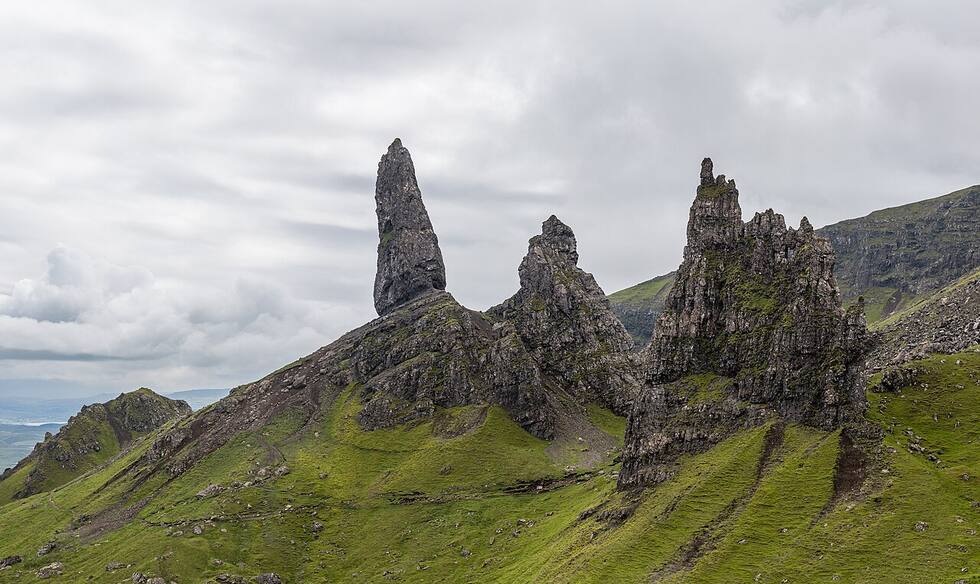

Give it time. Skye is around fifty miles long, but it is shaped like a set of long fingers, and driving from one peninsula to the next takes much longer than the map suggests. Three nights is a sensible minimum, and a week lets you walk, wait for the weather and enjoy the quieter corners.
Getting there
By road, the free Skye Bridge at Kyle of Lochalsh has linked the island to the mainland since 1995. It is reached by the A87, which runs through Glen Shiel and past Eilean Donan Castle. From Glasgow, it is about five hours' drive; from Inverness, about two and a half hours.
By ferry, CalMac runs a car ferry from Mallaig to Armadale in the south of the island, with a crossing of around forty minutes. Book ahead in summer, and check for disruptions. A small community-run turntable ferry also crosses the narrows between Glenelg and Kylerhea in summer, an enjoyable backroad approach.
By train, two of Scotland's great scenic lines end near the island. The line from Inverness runs to Kyle of Lochalsh, and the West Highland Line from Glasgow ends at Mallaig. From Kyle, buses cross the bridge. By coach, Scottish Citylink services run from Glasgow, Fort William and Inverness to Portree. Local buses cover the main roads, but they are not frequent, particularly on Sundays and in winter, and a car or a tour is the realistic way to reach most of the sights.
The main areas
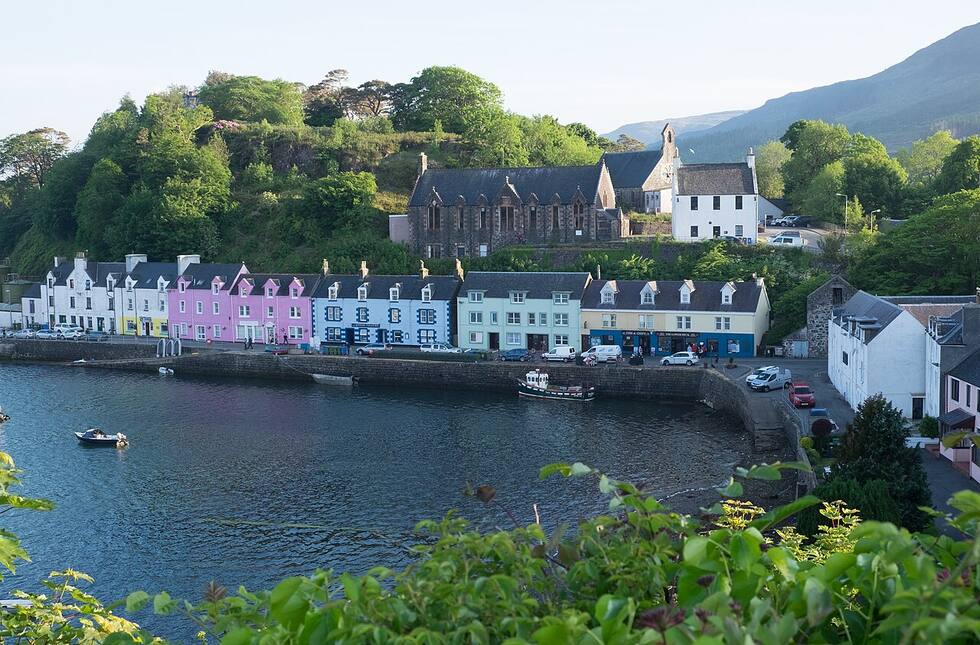
Portree is the island's main town, with a pretty harbour of painted houses, shops, restaurants and the most accommodation. It is the obvious base for a first visit, within easy reach of Trotternish.
Trotternish, the northern peninsula, is a long ridge created by ancient landslips. The Old Man of Storr is a huge pinnacle reached by a steep path of about an hour each way from a car park on the A855. Further north, Kilt Rock is a sea cliff of columnar basalt, with Mealt Falls dropping over the edge at the viewpoint. The Quiraing is a spectacular landscape of cliffs and rock towers, with a walk of a few miles from the car park on the single-track road above Staffin. Dinosaur footprints can be seen at low tide on the shore at An Corran, near Staffin. At the north-west side, the Skye Museum of Island Life at Kilmuir shows how crofters lived, and the Fairy Glen near Uig is a small valley of cone-shaped hills.
The Cuillin and Minginish are the mountainous heart of the island. The Black Cuillin is the most serious mountain range in Britain, with bare rock ridges that demand climbing skills, and the peak of Sgùrr Alasdair stands at 992 metres. Walkers without that experience can enjoy the views from Sligachan or from the path to the Fairy Pools in Glen Brittle, a series of clear, blue-green pools on a mountain stream. Talisker Distillery is at Carbost on Loch Harport.
Duirinish and Waternish, in the north-west, are quieter. Dunvegan Castle, the seat of the chiefs of Clan MacLeod, has gardens and seal-watching boat trips. At the far western tip, Neist Point has a lighthouse on a dramatic headland, and it is one of the best places on the island to watch the sunset.
Sleat, in the south, is known as the Garden of Skye because of its gentler, greener landscape. Armadale Castle and its gardens hold the Museum of the Isles, and Torabhaig is a newer distillery. Elgol, at the end of a long single-track road from Broadford, has one of the finest views of the Cuillin, and boats from its small harbour sail to the remote Loch Coruisk.

Where to stay
Portree has the widest choice of hotels, guest houses and apartments. Broadford is the second largest settlement, with a supermarket and easy access to the bridge and Elgol. Dunvegan, Carbost, Staffin and Uig have B&Bs, small inns and self-catering cottages. There are hostels and campsites around the island, including near Sligachan and in Glen Brittle.
Accommodation is limited, and for summer it can sell out months in advance, sometimes a year ahead for the best places. Do not arrive without a booking in high season. Some places have minimum stays, and rooms are often expensive compared with other parts of the Highlands. In remote areas, check where you can eat in the evening and book restaurants ahead, because tables run out too.
When to go
May and June often have the best combination of long days, dry spells and fewer midges. July and August are the busiest months, and the most popular car parks may be full by mid-morning. September can be excellent, with autumn colour and fewer visitors. Winter is quiet and atmospheric, with short days, frequent storms and many businesses closed. Rain is common in every season, and the weather can change within an hour, so plan flexibly and bring waterproofs and proper boots.
A four-day plan
Day one: arrive via Eilean Donan and the bridge, and settle in Portree. Day two: drive the Trotternish loop: the Storr early in the morning, Kilt Rock, the Quiraing and Uig. Day three: head west to Dunvegan Castle and Neist Point for the sunset. Day four: go to the Fairy Pools and Talisker, or Elgol for a boat trip to Loch Coruisk, and leave via Armadale if you are taking the ferry to Mallaig.
Practical notes
- Most roads outside the main routes are single track. Use passing places, let others overtake, and never park in them. See the Scotland guide for more on Highland driving.
- Visit popular places early or late in the day. Parking at the Storr and Fairy Pools is managed and charged, and you should not park on verges.
- Fill up with fuel in Portree, Broadford or Dunvegan before heading to remote peninsulas.
- Leave the Black Cuillin ridge to experienced climbers or those with a guide.
- From Uig, CalMac ferries sail to the Outer Hebrides, which makes Skye a natural stepping stone on a longer island trip.
- Skye is a long way from Edinburgh, about five and a half hours' drive, so one day each way is a realistic allowance.
Frequently asked questions
How many days do I need on Skye?
Three full days is a sensible minimum to see Trotternish, the Fairy Pools and Dunvegan or Neist Point. A week gives you time for walks, boat trips and bad weather. Day trips from Inverness or Edinburgh are possible on coach tours, but much of the day is spent travelling, so we recommend staying at least a couple of nights.
Can I visit Skye without a car?
It is possible, but you will see less. Citylink coaches reach Portree, and local buses run on main routes, with limited services on Sundays. Portree-based minibus tours fill the gaps and can reach Trotternish and Dunvegan. Staying in Portree or Broadford and combining buses, tours and taxis works for many visitors.
Is the Skye Bridge free?
Yes. Tolls on the bridge were abolished in 2004, and there is no charge to cross. The Mallaig to Armadale ferry and the Glenelg ferry charge fares, and it is advisable to book the Mallaig crossing in summer, particularly if you are travelling with a vehicle.
Are midges bad on Skye?
They can be, from late May to September, especially on still, damp evenings and near water and woodland. Wind keeps them away, and the exposed headlands are usually better. Bring repellent, consider a head net if camping, and plan evening walks somewhere breezy. May and September are usually the most comfortable months.
Guide me to UK is an independent information site. We do not own hotels or take bookings. Fares, opening hours and timetables change, so confirm them before you travel. Last updated 7 November 2026.