Home › Destinations › Salcombe and Dartmouth
Salcombe and Dartmouth
Salcombe and Dartmouth are the two best-known towns of the South Hams, the green, hilly corner of south Devon between Torbay and Plymouth. Both are sailing towns on deep, sheltered estuaries, both are pretty and neither is cheap. Dartmouth is the larger, with a long history as a port, a naval college on the hill and a good choice of restaurants. Salcombe is smaller, more of a summer resort, with sandy coves along the estuary and one of the highest proportions of second homes in the country.
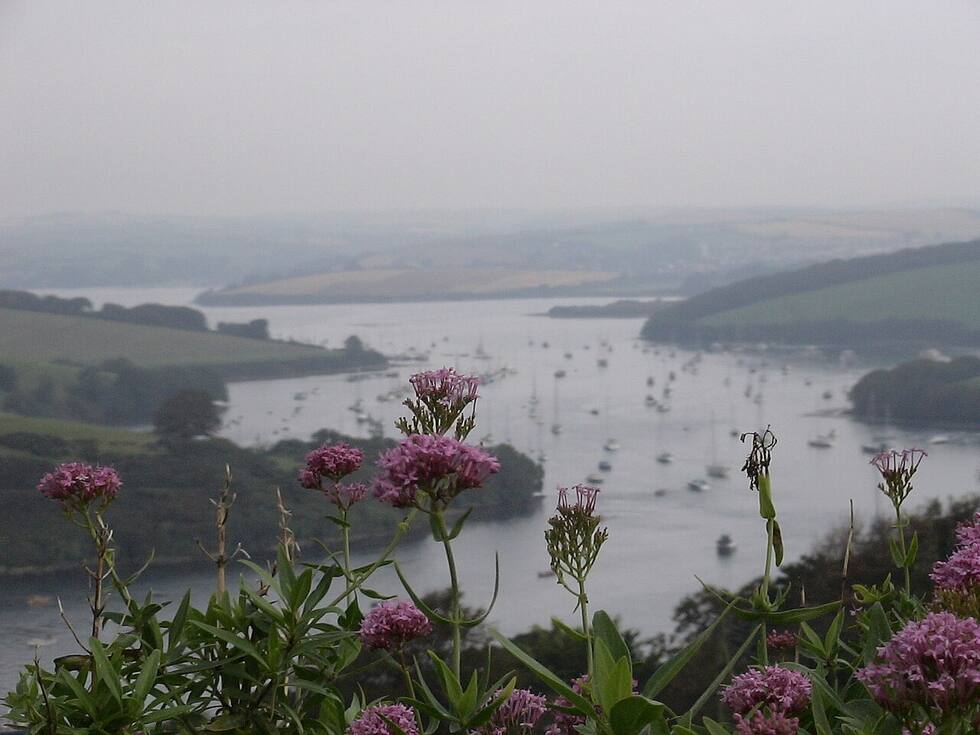

The two are only about twelve miles apart as the crow flies, but the lanes make it the best part of an hour by car. They suit couples, sailors, walkers and families who like boats and small beaches. They are less suited to a tight budget, and neither has a railway station, so a car-free trip takes some planning.
Getting there
The nearest main-line station for both towns is Totnes, on the line from London Paddington through Exeter to Plymouth. Buses run from Totnes to Dartmouth, and to Kingsbridge for Salcombe, though they are not frequent and you should check times before you travel. The most enjoyable way into Dartmouth is the Dartmouth Steam Railway from Paignton to Kingswear, which ends with a short ferry crossing. Dartmouth's own "station" on the embankment is a curiosity: it was built to sell tickets for the railway across the river and never had any tracks.
By car, leave the A38 at Buckfastleigh or Ivybridge for Totnes and Kingsbridge, or come through Torbay and cross the Dart on the Higher or Lower vehicle ferries, which saves a long drive round through Totnes. In Dartmouth, the park and ride on the A3122 at the top of the hill is much easier than the town centre. In Salcombe, the streets are narrow and the car parks small, so arrive early in summer or use the seasonal park and ride if it is running.
Dartmouth
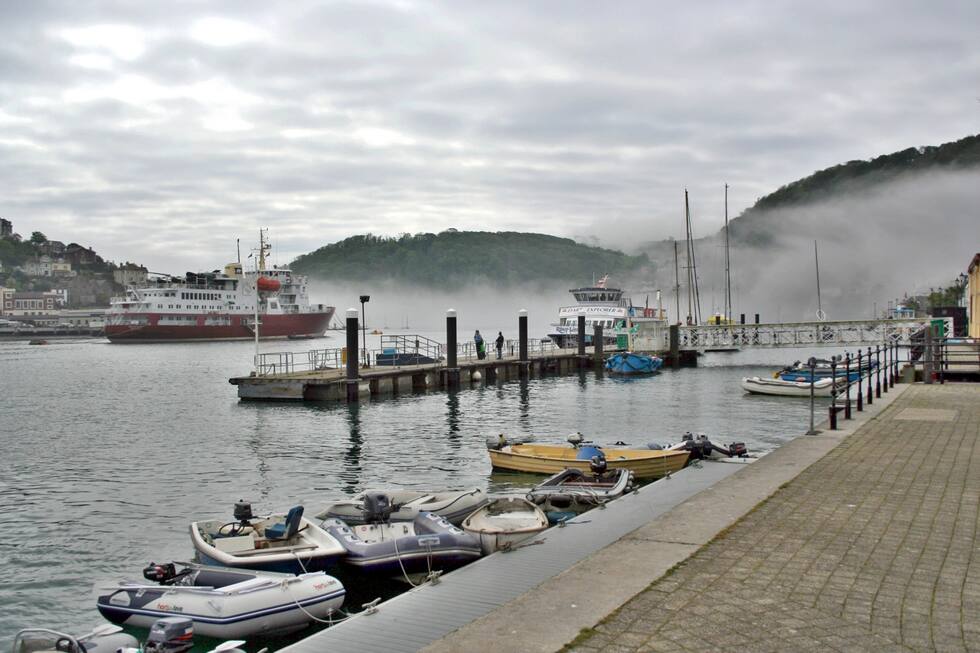
Dartmouth rises steeply from the west bank of the Dart, facing the village of Kingswear on the other side. Crusaders gathered here in the twelfth century, and the Mayflower put in for repairs in 1620. The old town still has plenty to show for it.
- The Butterwalk. A row of carved timber-framed merchants' houses from the 1630s, now shops and the small town museum.
- Bayard's Cove. A cobbled quay lined with old houses, with the remains of a Tudor artillery fort at the southern end. It has stood in for other places in several television dramas.
- Dartmouth Castle. Run by English Heritage, it guards the narrow river mouth, with St Petrox church beside it. You can walk there from town in about half an hour, or take the small seasonal ferry from the embankment.
- Britannia Royal Naval College. The large Edwardian building on the hill trains Royal Navy officers. Public tours are limited, so check in advance.
- River trips. Boats run up the Dart to Totnes, depending on the tide, and to Greenway, Agatha Christie's holiday home, now run by the National Trust.
Salcombe
Salcombe sits near the mouth of a long, branching estuary which, despite its name of the Kingsbridge Estuary, has no major river running into it: it is a drowned valley. The town is one long street of shops, galleries and pubs, with boats on all sides.
- The beaches. North Sands and South Sands lie south-west of the town, sheltered and sandy. Across the water at East Portlemouth, Mill Bay and the small sands along the shore catch the afternoon sun.
- The ferries. A small passenger ferry crosses to East Portlemouth all year, and a seasonal ferry runs from the town to South Sands. In summer, a ferry also runs up the estuary to Kingsbridge when the tide allows.
- Overbeck's. A National Trust house and subtropical garden on the steep hillside above South Sands, with palms, a banana garden and views down the estuary.
- Sailing and water sports. Salcombe has been a yachting town for a long time, and its regatta takes place in summer. Sailing schools, paddleboard and kayak hire operate in season.
- Kingsbridge. The market town at the head of the estuary, a few miles north, has supermarkets, a cinema and more ordinary prices. It makes a practical alternative base.

The coast between and beyond
The coast between the two towns is some of the finest in Devon. Blackpool Sands, near Stoke Fleming, is a sheltered, privately managed shingle cove backed by pines, with a car park charge in summer. Slapton Sands is a long shingle bar with a road along it and a freshwater lake, Slapton Ley, behind it. The lake is a nature reserve, with walks through the reed beds. At Torcross, a Sherman tank stands as a memorial to the Allied troops killed during training for D-Day, including the disaster of Exercise Tiger in 1944. Start Point has a lighthouse and a dramatic ridge of rock running out to sea. Prawle Point is the southernmost tip of Devon.
West of Salcombe, the path runs along the cliffs from Bolt Head to Bolt Tail, about six miles of high, open walking, ending at the twin fishing villages of Hope Cove. Further west, Bantham has a surf beach on the Avon estuary, and at Bigbury-on-Sea a tidal causeway leads to Burgh Island.
Where to stay
Dartmouth has inns, boutique hotels, guest houses and many holiday cottages, often up steep steps with views across the river. Kingswear, across the water, is quieter and connected by a short ferry. Stoke Fleming and Strete are villages on the coast road with a few inns and cottages.
Salcombe has a small number of hotels, some right on the water, and a large stock of self-catering houses. Prices are high in July and August, and many properties let by the week only. Kingsbridge, Malborough and Hope Cove are usually better value. Campsites and farm stays are scattered across the South Hams, and they are worth looking at if you want to keep costs down.
When to go
School summer holidays are the peak, with full car parks and queues for the ferries. Dartmouth's regatta takes place at the end of August and its food festival in October. Salcombe's season is shorter, and more of the town closes in winter, partly because so many homes are empty then. May, June and September are the best months for walking and for quieter beaches. Early spring brings primroses to the lanes and Overbeck's magnolias.
A four-day plan
Day one: walk Dartmouth's old town, then out to the castle. Day two: take a boat up the Dart to Greenway or Totnes. Day three: drive the coast road via Blackpool Sands, Slapton and Torcross to Salcombe. Day four: take the ferry to South Sands, visit Overbeck's, and walk on towards Bolt Head.
Practical notes
- South Hams lanes are narrow and high-hedged. Allow more time than the map suggests, and be ready to reverse.
- The Lower Ferry at Dartmouth carries only a few cars at a time, so expect queues on summer days.
- The road across Slapton Sands is exposed to the sea and has been damaged by storms. Check for closures after bad weather.
- For the rest of the county, see the Devon guide. For nearby towns, see Brixham and Paignton and Dartmoor.
Frequently asked questions
Should I stay in Salcombe or Dartmouth?
Dartmouth has more to see, more restaurants, and better access from Torbay, and it stays more open in winter. Salcombe has better sandy beaches, and it is the choice for a boat-focused summer holiday. Both have high prices in peak season. If budget matters, Kingsbridge offers a central position in the South Hams at lower rates.
Can I reach Dartmouth by train?
Not directly. The nearest main-line station is Totnes, from which buses run to Dartmouth. The heritage Dartmouth Steam Railway runs from Paignton to Kingswear on the opposite bank, and a short passenger ferry completes the journey. The old station building on the Dartmouth embankment never had any tracks.
Are there sandy beaches near Dartmouth?
The closest beaches are mostly shingle, including Blackpool Sands and Slapton Sands, both a short drive south. Castle Cove near Dartmouth Castle is small and rocky. For sand, you will need to go further, to the beaches around Salcombe or to Bantham on the Avon estuary.
How long does it take to walk the coast path from Dartmouth to Salcombe?
Allow two days for the distance of around twenty miles, depending on the route, which passes Slapton Sands, Start Point and Prawle Point. You also need to cross the estuary to Salcombe on the East Portlemouth ferry at the end, so check that it is running. Walkers usually stay overnight around Torcross or Beesands.
Guide me to UK is an independent information site. We do not own hotels or take bookings. Fares, opening hours and timetables change, so confirm them before you travel. Last updated 7 November 2026.