Home › Destinations › Exeter
Exeter
Exeter is the county city of Devon, built on a ridge above the River Exe, with a Gothic cathedral at its centre and long stretches of Roman and medieval wall around the old core. It is small enough to walk across in half an hour and lively enough, with a large university, to have good restaurants, theatres and a busy high street. For visitors it plays two roles: a short city break in its own right, and the most practical base or stopover for the rest of Devon, because railway lines run out from Exeter to the coast in almost every direction.

Getting there
Exeter has two main stations. Exeter St Davids, below the city on the west side, is on the main line from London Paddington, with the fastest trains taking a little over two hours, and on cross-country routes from Bristol, Birmingham and the north. Exeter Central, in the city centre, is served by South Western Railway trains from London Waterloo via Salisbury, which are slower but useful from the south of England. A third station, St Thomas, serves the area across the river.
By road, Exeter is at the end of the M5, where it meets the A30 to Cornwall and the A38 to Plymouth. Park-and-ride sites on the edge of the city avoid central traffic. Exeter Airport, east of the city, has domestic and European flights.
The cathedral
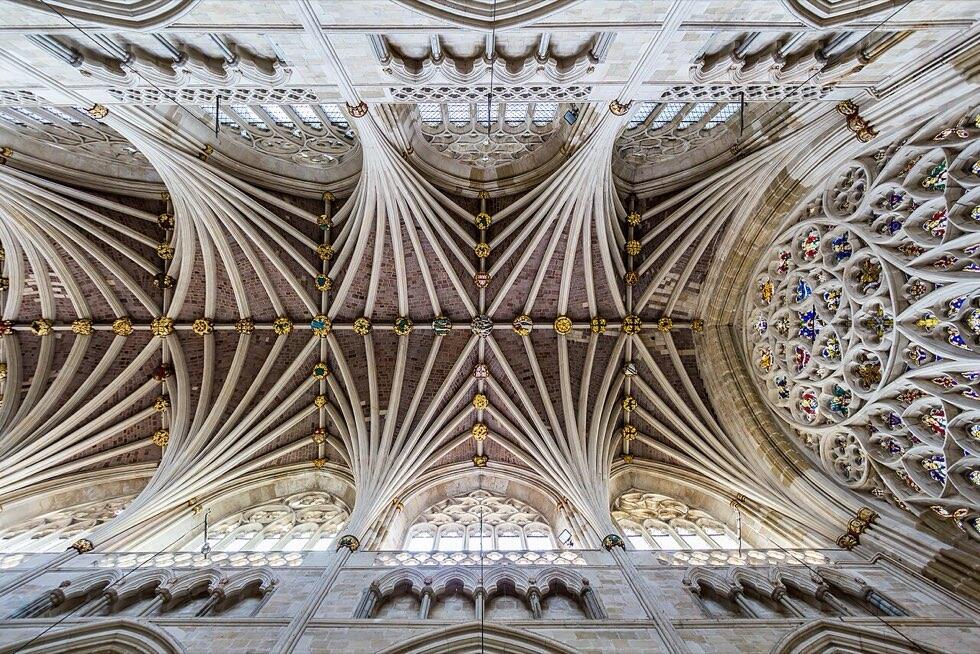
Exeter Cathedral is the reason to come. Its two massive Norman towers survive from the twelfth century, but most of the building was rebuilt in the Decorated Gothic style between about 1270 and 1350. Inside, the nave has the longest continuous medieval stone vault in the world, a forest of ribs running unbroken from west to east. Look for the minstrels' gallery with its carved angels playing medieval instruments, the astronomical clock, and the west front's tiers of carved figures. Guided tours, including tours of the roof, run on many days.
The Cathedral Green in front is the city's main open space, lined with old houses, cafés and restaurants. On a sunny day half of Exeter seems to be sitting on the grass.

The quay and the river
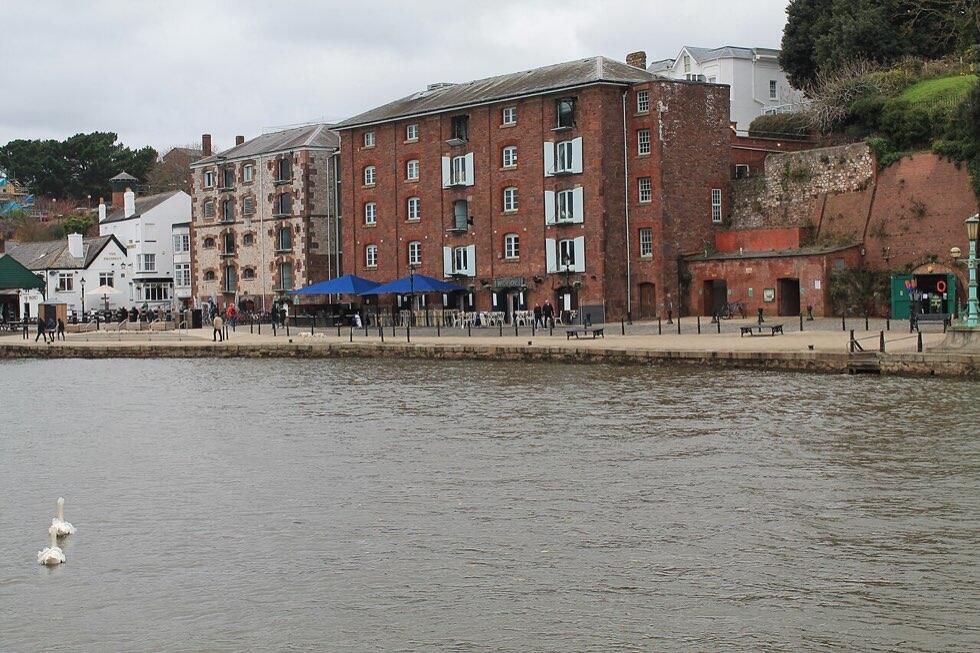
A short walk downhill from the centre, Exeter Quay is a historic waterside of warehouses, the 1680s Custom House, antique shops, cafés and boat hire. A footbridge and the small hand-hauled Butts Ferry, when running, cross the river. From here the Exeter Ship Canal, dating from the 1560s and one of the oldest artificial waterways in England, runs south beside the river towards the estuary.
The Exe Estuary Trail follows the canal and the estuary on a mostly flat, traffic-free path. It goes to the riverside town of Topsham, about four miles away, with its Dutch-gabled houses and pubs, and continues down both sides of the estuary to Exmouth and Dawlish. Bikes can be hired at the quay. Trains on the Avocet Line from Exeter to Exmouth make it easy to cycle one way and ride back.
Other things to see
- Royal Albert Memorial Museum (RAMM): a large, free museum covering Devon's history, natural history and world cultures.
- Underground Passages: medieval tunnels built to carry clean water into the city, which can be visited on guided tours. Not for anyone uncomfortable in tight spaces.
- The city walls: much of the circuit survives, built on Roman foundations. A walking trail follows them with information boards.
- Rougemont Gardens and Northernhay Gardens: parks beside the remains of the Norman castle gatehouse.
- The Guildhall: one of the oldest municipal buildings in England still in use, on the High Street.
- Exeter Phoenix and the Northcott Theatre: arts venues with films, music and drama.
Where to stay
The city centre has hotels around the cathedral and the high street, including some in historic buildings, plus modern chain hotels and serviced apartments. It is the best choice for a city break, close to the cathedral, restaurants and Exeter Central station. St Davids and the area around the station has budget hotels and guest houses on the hill, convenient for early trains. St Leonard's and Heavitree are residential districts east of the centre with guest houses and B&Bs in larger Victorian houses. Topsham, downriver, has a few inns and rooms for a quieter stay with its own station.
Rooms can be scarce during university graduations, big rugby matches at Sandy Park (home of the Exeter Chiefs) and major conferences. Book ahead for those dates.
Day trips by train
- The Riviera Line along the sea wall to Dawlish, Teignmouth and Torquay.
- The Avocet Line down the east side of the estuary to Topsham, Lympstone and Exmouth, with its long beach.
- The Tarka Line through mid-Devon to Barnstaple, for north Devon and the coast around Croyde.
- The Dartmoor Line to Okehampton, reopened to regular passenger trains in 2021, for walks on the northern edge of Dartmoor.
When to go
Exeter works year round. Spring and summer are best for the quay and the estuary trail. In December, the city has Christmas markets and the cathedral holds carol services. University term times make the city busier; summer is quieter in the centre but busier with holidaymakers passing through.
A one-day plan
Start at the cathedral when it opens, then walk the High Street to the Guildhall and Rougemont Gardens. After lunch, visit RAMM or take an Underground Passages tour, then walk down to the quay. Hire a bike and ride the estuary trail to Topsham for an early evening drink, and take the train back.
Frequently asked questions
How long do I need in Exeter?
One full day covers the cathedral, the centre, a museum and the quay. Two days let you add the Underground Passages, a cycle or walk along the Exe Estuary Trail to Topsham, and a relaxed evening in town. If you are using Exeter as a base, it is easy to add day trips by train to the coast, Dartmoor and north Devon.
Which station should I use?
Exeter St Davids for trains from London Paddington, Bristol, the Midlands and Cornwall, and for most coastal branch lines. Exeter Central for South Western Railway trains from London Waterloo and the Avocet Line to Exmouth. The two are about fifteen minutes apart on foot, uphill to Central, and connected by frequent local trains.
Can I cycle from Exeter to the sea?
Yes. The Exe Estuary Trail runs from Exeter Quay down the west side of the estuary to Dawlish Warren and Dawlish, and on the east side through Topsham and Lympstone to Exmouth. It is mostly flat and traffic-free. Bike hire is available at the quay, and you can take bikes back on local trains, within each operator's rules.
Is the cathedral free to visit?
Exeter Cathedral charges an admission fee for sightseeing visitors outside services, which includes access to the nave and guided tours at set times. Attending services is free. Roof tours and special tours are booked separately. Check the cathedral's website for current opening hours and prices, which vary during special events.
Guide me to UK is an independent information site. We do not own hotels or take bookings. Fares, opening hours and timetables change, so confirm them before you travel. Last updated 1 November 2026.