Home › Destinations › York
York
York is a walled cathedral city in North Yorkshire with nearly two thousand years of continuous history on show at street level. The Romans founded it as Eboracum, the Vikings ruled it as Jorvik, and the medieval city that grew up afterwards survives almost intact inside its stone walls: narrow lanes, a vast Gothic minster, half-timbered buildings leaning into one another, and a complete circuit of walkable ramparts. It is compact enough to see on foot in a day or two, and dense enough with things to see that most visitors come back.

It suits city breaks of one to three days, history and architecture enthusiasts, and families, with enough indoor museums to cope with Yorkshire's changeable weather. York is also a practical stop on the way between London and Edinburgh or Newcastle.
Getting there
York station is on the East Coast Main Line, with fast trains from London King's Cross taking around two hours, and direct services from Edinburgh, Newcastle, Leeds and Manchester. The station is a short walk, just outside the city walls, from the historic centre. By car, York sits near the A1(M) and the M62, but the centre has restricted traffic and limited parking; several park and ride sites on the ring road are the easiest way in. Leeds Bradford Airport is about forty-five minutes away by road.
York Minster and the old city
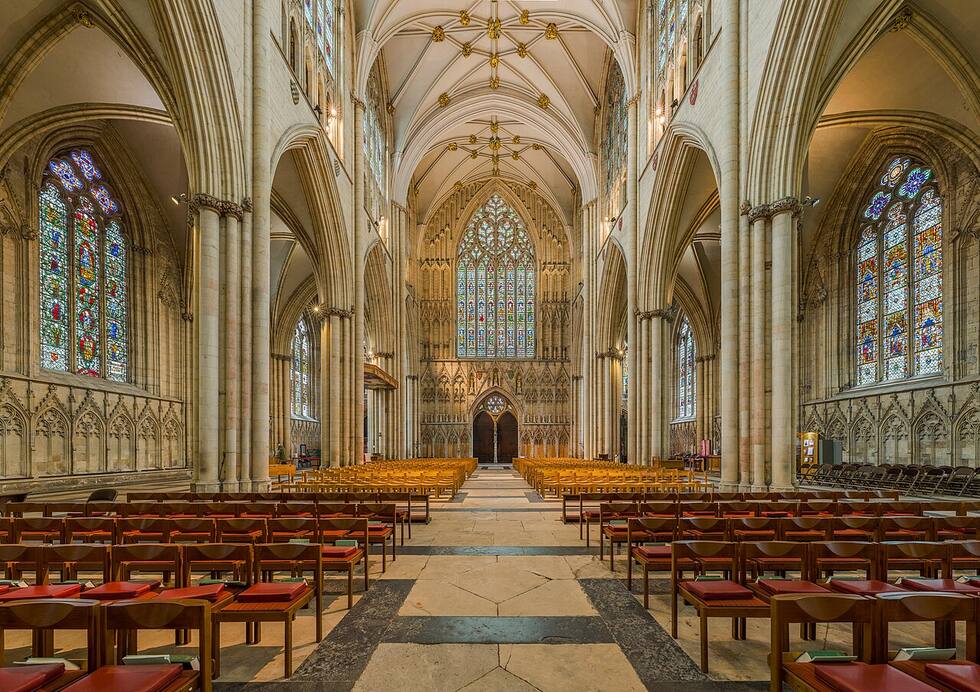
York Minster is one of the largest Gothic cathedrals in northern Europe, built mainly between the thirteenth and fifteenth centuries, with the widest Gothic nave in England and medieval stained glass that survived the Reformation and both World Wars largely intact. The Great East Window, finished in 1408, is said to be the largest expanse of medieval stained glass in the world. A tower tour, booked separately, climbs to the top for views across the city rooftops.
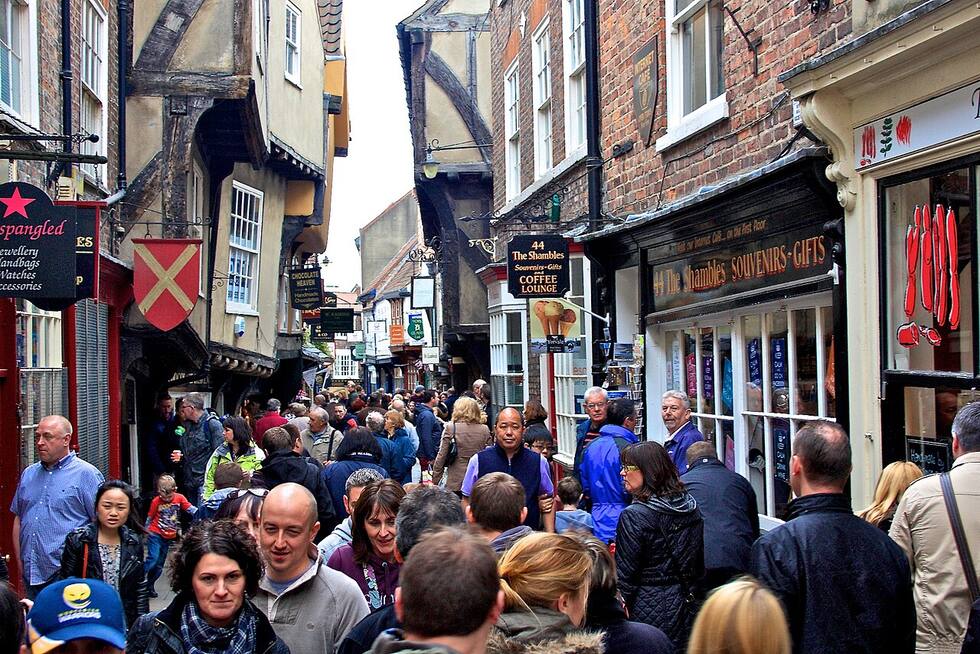
The Shambles, a narrow medieval street of overhanging timber-framed buildings that once housed the city's butchers, is one of the best-preserved streets of its kind in Europe and now lined with shops; it gets very busy in the middle of the day. The surrounding streets, including Stonegate and Petergate, have a similar character with fewer crowds.

The city walls and the gates
York's medieval walls form a nearly complete circuit of about two and a quarter miles, built on earlier Roman and Viking defences, and a walk along the top of them is one of the best ways to understand how the city is laid out. Bootham Bar, Monk Bar and Walmgate Bar are among the surviving medieval gatehouses, each with its own small exhibition. Clifford's Tower, the stone keep of York Castle, stands on a mound above the river and is open to climb for a view over the city.
Museums
- Jorvik Viking Centre. Built on the site of a major archaeological dig, it recreates Viking-age York with a ride through reconstructed streets based on the finds made here, plus genuine artefacts.
- National Railway Museum. Free to enter and one of the largest railway museums in the world, with royal carriages, a Japanese bullet train and the record-breaking Mallard steam locomotive, a short walk from the station.
- York Castle Museum. Social history displayed through reconstructed historic streets and period rooms, including a Victorian cobbled street under cover.
- Yorkshire Museum. Roman, Anglo-Saxon and medieval collections set in parkland beside the ruins of St Mary's Abbey.
Other historic buildings
- Merchant Adventurers' Hall. One of the best-preserved medieval guildhalls in Europe, built in the 1360s by York's richest trade guild and still in use for events, with a great timber-framed hall open to visitors.
- The Bar Convent. A working convent near the station with a hidden eighteenth-century chapel, the oldest surviving Catholic convent in England, open as a small museum.
- Treasurer's House. A National Trust house of mixed periods behind the Minster, said to be one of the most haunted buildings in York, with well-kept period rooms.
- Fairfax House. A restored Georgian townhouse near Clifford's Tower, furnished to show how a wealthy York family lived in the 1760s.
Day trips
The North York Moors and the market town of Whitby, with its abbey ruins and Dracula associations, are under an hour by car. The heritage North Yorkshire Moors Railway runs steam trains from Pickering through the moors to Whitby. Inland, Castle Howard, the grand stately home used as a filming location for Brideshead Revisited, is about twenty-five minutes' drive. Harrogate, a Victorian spa town with its own Royal Pump Room and the Valley Gardens, is a short train ride away.
Where to stay
Inside the walls, boutique hotels and guest houses occupy converted townhouses on streets such as Bootham and near the Minster, putting everything within walking distance. The area around the station, just outside the walls, has larger hotels convenient for an early train. For something quieter, villages a short drive or bus ride outside the city, such as Bishopthorpe or Poppleton, have B&Bs with easier parking. York is a popular stag and hen destination, so weekends in the centre can be livelier than weekdays.
When to go
Spring and autumn offer good sightseeing weather without the peak summer crowds, which can be considerable around the Minster and the Shambles. York hosts a well-regarded Christmas market in the weeks before the holiday, when the city is especially busy and atmospheric. Summer brings long days and festivals; winter is quieter and the museums make good shelter from Yorkshire's rain.
A two-day plan
Day one: York Minster in the morning, lunch near the Shambles, then a walk along the city walls from Bootham Bar to Monk Bar. Day two: the Jorvik Viking Centre or York Castle Museum, followed by the National Railway Museum in the afternoon, finishing with a walk along the river.
Frequently asked questions
How long do I need in York?
A single busy day covers the Minster, the Shambles and a walk on the city walls. Two days let you add a museum, such as the Jorvik Viking Centre or the National Railway Museum, and a proper look round without rushing.
Is York walkable, or do I need public transport?
The historic centre is compact and best explored on foot, with the city walls giving an easy, mostly level route around much of it. A car is not useful inside the walls, and several park and ride sites on the edge of the city are the easiest way to arrive if you are driving.
Do I need to book York Minster in advance?
It is not usually essential outside peak times, but booking online guarantees entry and can be cheaper than paying on the door. Tower tours have limited places and do need separate booking, often well ahead in summer.
Is York good for a family day out?
Yes. The Jorvik Viking Centre, the National Railway Museum (which is free to enter) and the city walls, which children generally enjoy walking, all suit families. The Shambles is also an easy, car-free street to explore with children.
Guide me to UK is an independent information site. We do not own hotels or take bookings. Fares, opening hours and timetables change, so confirm them before you travel. Last updated 19 November 2026.