Home › Destinations › Lake District
Lake District
The Lake District is a national park of glacial lakes, fells and stone-walled valleys in Cumbria, in the north-west of England. It is the largest national park in England and the one most closely tied to a literary tradition, having shaped the work of William Wordsworth, who grew up and lived here, and Beatrix Potter, who used her royalties from the Peter Rabbit books to buy and protect large areas of the fells. The scenery ranges from the gentle, well-visited shores of Windermere, England's largest lake, to the wilder, quieter fells around Ennerdale and Wasdale.

It suits walkers of every level, families who want lake steamers and gentle shoreline paths, and anyone after good food and a comfortable inn after a day outdoors. Distances on the map look short, but the roads are narrow and winding, and a journey between valleys often takes longer than it suggests.
Getting there
The main gateway by train is the Windermere branch line, which leaves the West Coast Main Line at Oxenholme, near Kendal, and reaches Windermere station in about twenty minutes. Trains from London Euston to Oxenholme take around three hours. For the northern lakes, Penrith, also on the West Coast Main Line, is the usual station, with buses on to Keswick. By car, the M6 runs along the eastern edge of the park, with junction 36 for the southern lakes via Kendal and junction 40 for Ullswater and Penrith. Manchester Airport is about an hour and a half from the southern lakes by road.
Windermere, Bowness and the southern lakes
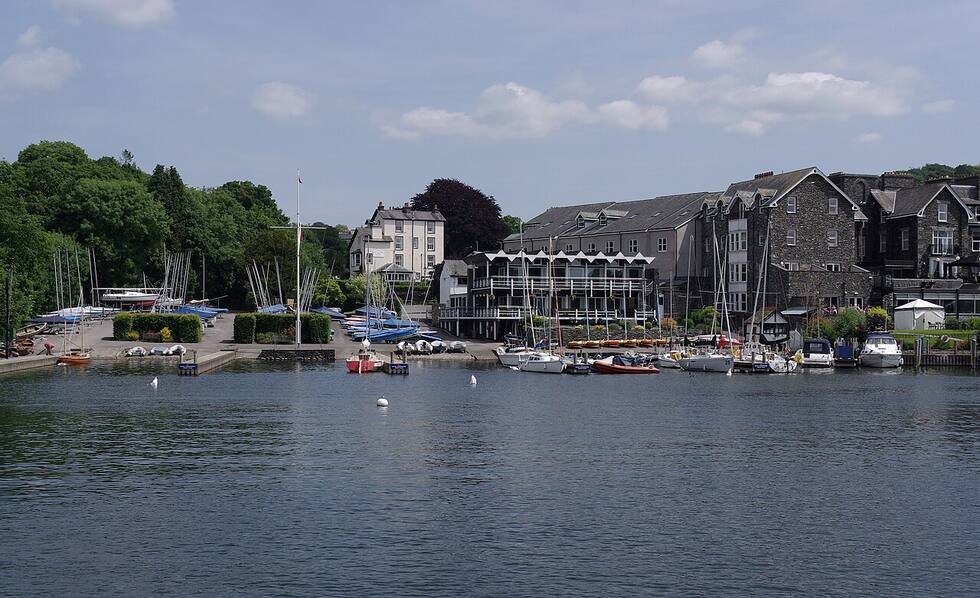
Windermere is both the lake, over ten miles long, and the town above it, which grew up around the Victorian railway terminus. A mile downhill, Bowness-on-Windermere sits directly on the water, with the main steamer pier, boat hire, the Windermere Jetty Museum of historic boats, and the World of Beatrix Potter attraction. Steamers run the length of the lake between Lakeside, Bowness and Ambleside, and a car ferry crosses at Windermere's narrowest point to reach the quieter western shore.
Nearby, Hill Top, Beatrix Potter's farmhouse near Near Sawrey, is preserved by the National Trust much as she left it, and remains one of the most visited literary homes in the country; visitor numbers are managed with timed tickets. Coniston Water, a smaller lake to the west, is known for its connection to speed record attempts by Donald Campbell and for the Ruskin Museum.
Ambleside, Grasmere and the central fells
Ambleside, at the head of Windermere, is a popular base for walkers, with outdoor shops, cafés and easy access to Langdale. Grasmere, a little further north, was Wordsworth's home for many years; Dove Cottage, where he lived, and his grave in the village churchyard are both open to visitors. The village is also known for its traditional gingerbread, sold from a shop by the churchyard since the 1850s. Langdale, to the west, has some of the park's most dramatic fellside scenery, with the Langdale Pikes rising sharply above the valley.

Keswick and the northern lakes
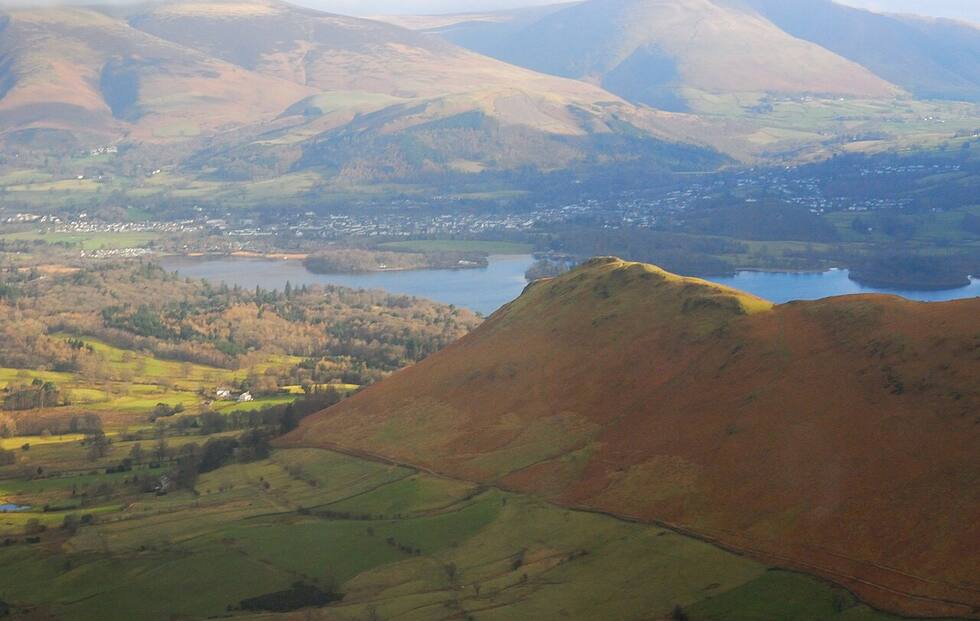
Keswick, on the shore of Derwentwater, is the main town of the northern lakes, with a busy market square, a launch service around the lake calling at several piers, and the Lake District's biggest concentration of outdoor shops. From the town, Catbells is a short, popular fell walk with views over the lake that suits most fitness levels, while Skiddaw, the fourth-highest fell in the district, is a longer climb from the edge of town. Ullswater, to the east, is considered by many the most beautiful of the lakes, quieter than Windermere, with its own historic steamers and the Aira Force waterfall nearby.
Walking and the fells
The Lake District has walks for every level, from level lakeside paths suitable for pushchairs to serious mountain days on Scafell Pike, England's highest peak at 978 metres, reached most directly from Wasdale or Borrowdale. The fells were extensively catalogued by the writer and illustrator Alfred Wainwright in a series of hand-drawn guidebooks, and "bagging the Wainwrights" — walking all 214 of the fells he described — remains a popular pursuit. Weather on the fells changes quickly; mist and rain can arrive within the hour even on a clear morning, so proper boots, a map and a waterproof are essential above the valley floor.
Where to stay
Windermere and Bowness have the widest choice of hotels, guest houses and self-catering, much of it with lake views, and the most going on in the evening. Ambleside and Grasmere suit walkers who want to be close to the fells, with inns, small hotels and cottages. Keswick is the equivalent base for the northern lakes. Quieter valleys such as Borrowdale, Langdale and Wasdale have farm stays, youth hostels and a handful of remote inns, popular with serious walkers who want to start early. Book well ahead for peak summer weekends and bank holidays, when the whole region fills up.
When to go
Late spring and early summer bring long days, lambs in the fields and rhododendrons in flower, with generally the best chance of settled weather. July and August are busiest, especially around Windermere and Bowness, where car parks and roads can be badly congested on fine weekends. Autumn brings bracken turning gold and russet on the fellsides, a particularly photogenic season. Winter is quiet, atmospheric and sometimes snowy on the higher fells, but many attractions reduce their hours and some mountain paths become genuinely hazardous without the right equipment and experience.
A three-day plan
Day one: arrive in Windermere, take the steamer to Ambleside and back, and visit Hill Top if it is open. Day two: walk Catbells or another gentle fell from Keswick, and take the Derwentwater launch round the lake. Day three: visit Grasmere and Dove Cottage, then a longer walk in Langdale if the weather allows, finishing with dinner at a village inn.
Frequently asked questions
Is it better to stay in Windermere, Bowness or Ambleside?
Bowness-on-Windermere sits right on the lake, with the steamer piers and the busiest atmosphere. Windermere town, a mile up the hill, is quieter and has the main railway station. Ambleside, at the lake's northern tip, is a good base for walkers, with easy access to Langdale and Grasmere. All three work without a car if you use the lake steamers and buses.
Do I need a car in the Lake District?
It makes life much easier, particularly for reaching villages away from Windermere and Keswick, but it is not essential. The Windermere branch line, lake steamers, and the open-top bus network between the main towns cover a good deal of ground, and many classic walks start from a bus stop.
How do I get from Windermere to Keswick without a car?
The X4/X5 bus service runs between Kendal, Windermere, Ambleside, Grasmere and Keswick fairly frequently, with journey times of around fifty minutes from Windermere to Keswick. Check current timetables, since rural bus services change.
Is the Lake District busy in summer?
Very, especially Bowness, Ambleside and the honeypot car parks at spots such as Tarn Hows. Weekdays outside school holidays are considerably quieter. Arriving early in the day for popular walks, or choosing a quieter valley such as Eskdale or Ennerdale, avoids the worst of it.
Guide me to UK is an independent information site. We do not own hotels or take bookings. Fares, opening hours and timetables change, so confirm them before you travel. Last updated 19 November 2026.