Home › Destinations › Weymouth
Weymouth
Weymouth is a Georgian seaside resort on the Dorset coast, built around a long curve of golden sand and a working harbour that cuts straight through the middle of town. It became fashionable in the 1780s after King George III started taking sea-bathing holidays there, and the esplanade of tall, pastel-coloured terraces still looks much as it did then. Behind the beach, the harbour is lined with pubs, seafood stalls and fishing boats rather than yachts, which gives the town a working feel that some newer resorts lack.

It suits a classic family beach holiday, a base for the Jurassic Coast, and anyone who wants a station in the town centre rather than a car park at the edge of it. Weymouth is calmer and less built-up than Bournemouth, with a smaller, more old-fashioned seafront.
Getting there
Weymouth is the southern end of the line from London Waterloo, reached in around two and three-quarter hours via Dorchester and the South Western main line. The station sits a short walk from both the beach and the harbour, so arriving by train is genuinely practical here. By car, the A354 continues south from Dorchester, which is itself on the A35 and A37. Weymouth also has a cross-Channel ferry terminal with sailings to the Channel Islands and France in season, and Weymouth Pavilion, the seafront theatre, is a short walk from the ferry berth.
The beach and esplanade
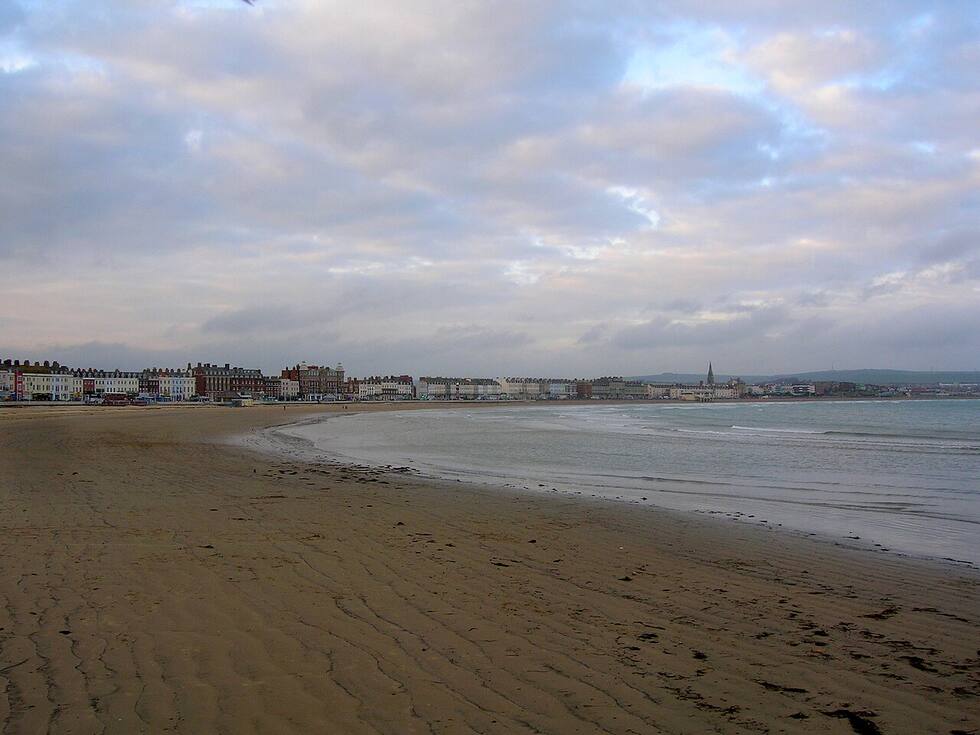
The beach runs for nearly two miles in a gentle curve, backed by the Georgian and Victorian terraces of the esplanade. The sand is fine, the bay is sheltered, and the water shelves gently, which makes it one of the safer beaches on this stretch of coast for small children. Donkey rides, a Punch and Judy show and deckchair hire keep up the traditional seaside feel in summer. At the northern end, near the clock tower memorial to Queen Victoria's jubilee, the beach is busiest; walk south towards Greenhill and it thins out.
The Jubilee Clock and the statue of George III on horseback, cut into the chalk hillside above the town, are both reminders of the resort's royal patronage. Alexandra Gardens, a small park behind the southern end of the beach, has a bandstand used for free concerts in summer.
The harbour
Weymouth's harbour is tidal and runs inland from Weymouth Bay, crossed by a lifting bridge that still opens for boats. Along the quayside, the Old Harbour has pubs, fish and chip shops, ice cream parlours and stalls selling fresh crab and lobster straight off the boats. It is a good place for an evening walk, and busy with anglers and families feeding the resident swans by day. Boat trips run from the harbour to Portland and along the coast in season.

Day trips nearby
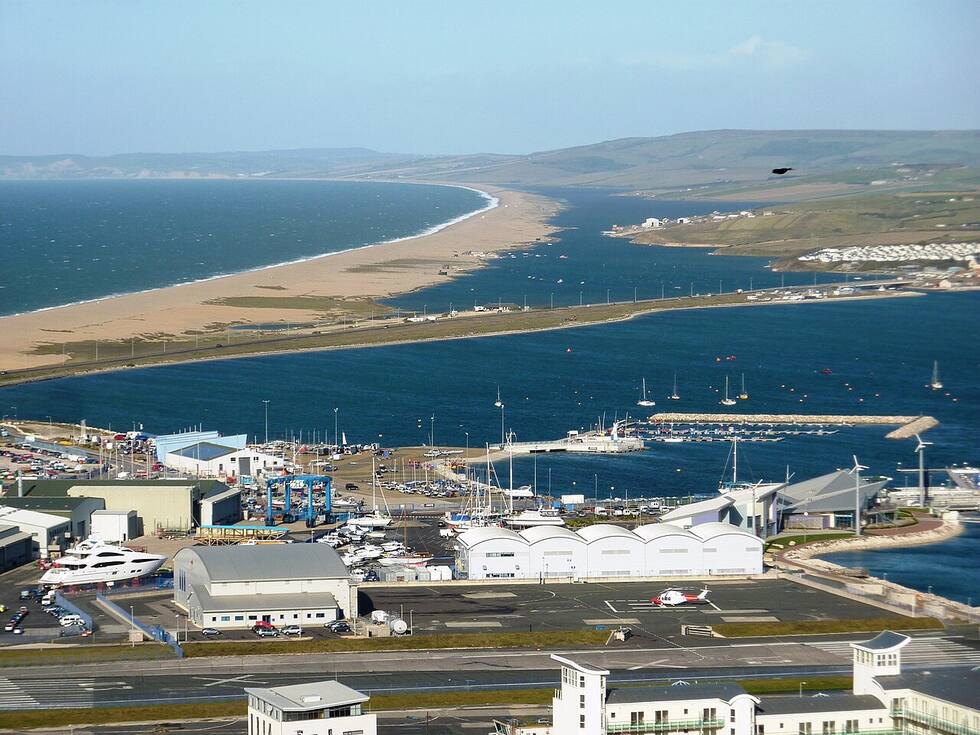
- The Isle of Portland. Not really an island but a limestone peninsula joined to the mainland by Chesil Beach, Portland has dramatic quarried cliffs, Portland Bill lighthouse at its southern tip, and Portland Castle, a Henry VIII fort overlooking the harbour used for the 2012 Olympic sailing events.
- Chesil Beach. An eighteen-mile bank of shingle running from Portland to Abbotsbury, enclosing a lagoon called the Fleet. It is extraordinary to walk along but the shingle is steep and swimming is dangerous because of the undertow; use it for views and walking, not for bathing.
- Abbotsbury. A village at the western end of Chesil Beach with a swannery dating from medieval times, subtropical gardens and the ruins of a tithe barn.
- Durdle Door and Lulworth Cove. A limestone arch and a near-circular bay further east along the Jurassic Coast, both reachable by car or on a long coast path walk.
- Dorchester. The county town, a short train ride away, with Roman remains, the Dorset Museum and links to Thomas Hardy, who was born nearby and lived at Max Gate on the edge of town.
Food and the harbourside
Fresh seafood is the thing to eat in Weymouth. Crab and lobster come straight off the boats moored along the Old Harbour, and several stalls and small restaurants there sell it dressed, in sandwiches or simply boiled with bread and butter. The town also has a long tradition of fish and chip shops along the esplanade and around the harbour, several of them multi-generation family businesses. A Thursday and Saturday market sets up near the town bridge in the warmer months, selling local produce alongside the usual seaside stalls.
Where to stay
The esplanade has rows of seafront guest houses and small hotels in converted Georgian terraces, many with sea views from the upper floors. The streets just behind, around St Mary Street and St Thomas Street, have cheaper guest houses a short walk from both the beach and the harbour. The Old Harbour area has a handful of characterful pubs with rooms. For self-catering, look towards Preston and Overcombe to the east, which are quieter and closer to the coast path towards Osmington. Holiday parks are concentrated along the coast east of town and on Portland.
When to go
July and August bring the warmest sea, the busiest beach and, when it runs, the Weymouth Carnival. Weymouth also holds an annual beach kite festival and seafront fireworks in the summer season. June and September are quieter and often still warm enough to swim. Winter is very quiet, but the esplanade and harbour are still pleasant for a walk, and storms on Chesil Beach are dramatic to watch from a safe distance.
A two-day plan
Day one: walk the full length of the esplanade, swim or paddle at the main beach, and spend the evening on the harbourside with fish and chips. Day two: drive or take a boat trip to Portland for the Bill and the castle, then continue to Abbotsbury for the swannery and a view along Chesil Beach.
Frequently asked questions
Is Weymouth beach good for swimming?
Yes. The main town beach is sandy, shelves gently and is lifeguarded in the summer season, which makes it one of the safer beaches on this coast for families. Chesil Beach, further along, is not safe for swimming because of its steep shingle and strong undertow.
Can I get to Weymouth by train from London?
Yes, directly. South Western Railway runs trains from London Waterloo to Weymouth in around two and three-quarter hours, and the station is a short walk from both the beach and the harbour.
Is Portland part of Weymouth?
No, Portland is a separate limestone peninsula joined to the mainland by Chesil Beach, a few minutes south of Weymouth by car or bus. It has its own harbour, lighthouse and castle, and makes a good half-day trip.
How far is Durdle Door from Weymouth?
About thirteen miles by road, roughly thirty minutes' drive via Wool or the coast road through Lulworth. There is no train station nearby; the approach on foot along the coast path from Lulworth Cove is popular but involves steep climbs.
Guide me to UK is an independent information site. We do not own hotels or take bookings. Fares, opening hours and timetables change, so confirm them before you travel. Last updated 19 November 2026.